Showing posts with label Marathi Bhaajya. Show all posts

Wednesday, December 3, 2014

Pav Bhaji

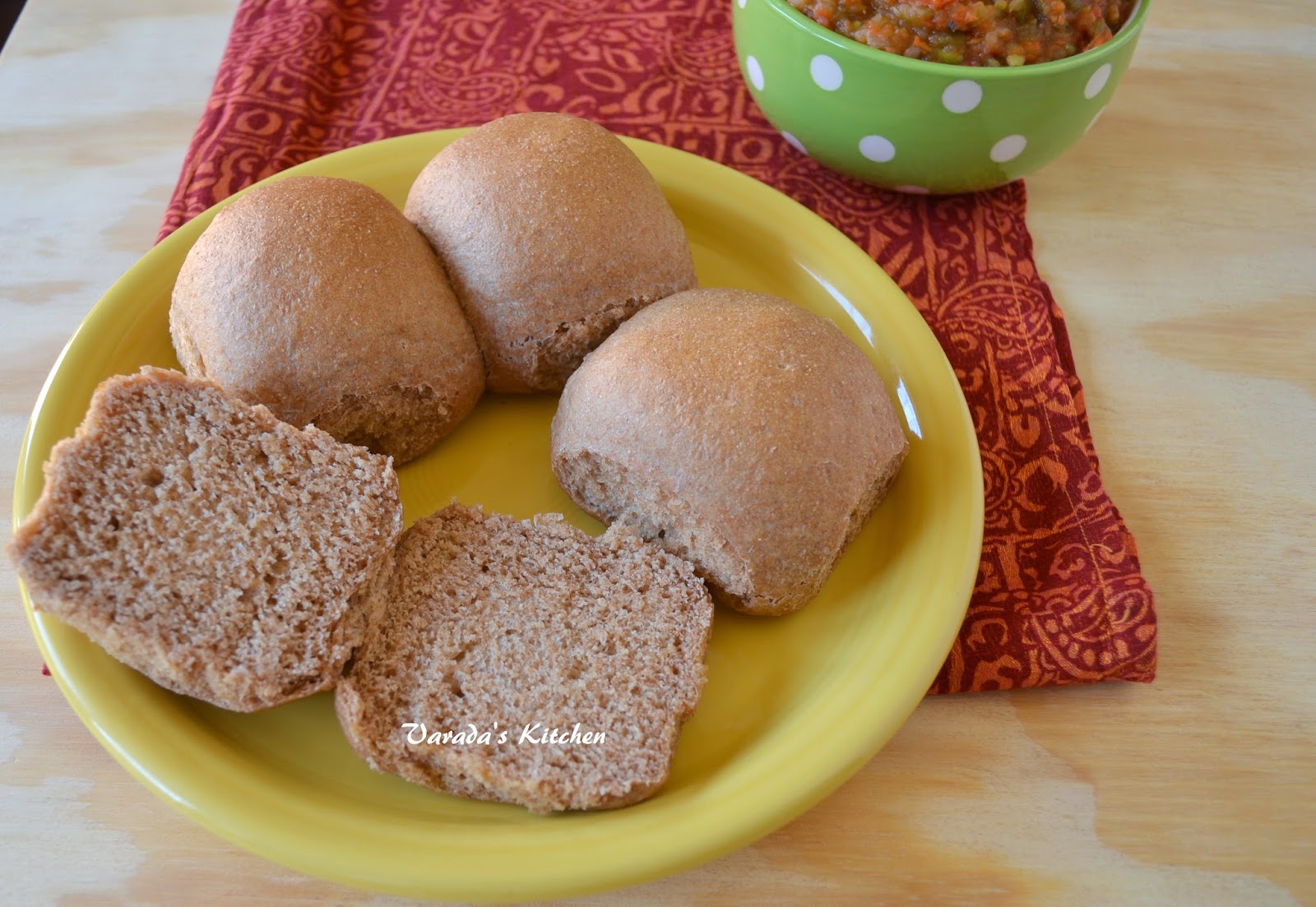
Pav bhaji is classic street food from Mumbai. Mixed vegetables cooked in butter served with fresh butter roasted rolls. Pav bhaji is now available in restaurant menus. It is also very popular on the party or potluck menu. I make pav bhaji almost every weekend to finish all the weekly leftover vegetables before I go grocery shopping again.


Pav bhaji is very loved in my house. I bake the pav or buns fresh for the day and everyone loves the spicy bhaji with the hot pav. I usually cook the bhaji in oil and use butter very sparingly if at all. You could however, use butter instead of the oil. Since the pav is hot and fresh I do not roast it on the pan in butter. However, if you are using store bought pav or day old pav you might want to brown them in butter on a hot griddle.

You will need
For the bhaji
1 large russet potato
3 carrots
2 large handfuls of green beans
1 onion
3 tomatoes
1 tbsp. olive oil (vegetable oil)
1 tsp. ginger garlic paste
1 tbsp. pav bhaji masala
1 tsp. sugar
1 green chili pepper, minced
salt to taste
1 lemon

For the Pav Bhaji
Laadi pav
Bhaji from recipe above
garnish with raw onion and lemon juice

To make the bhaji
Wash, peel the carrot and cut into big chunks. Wash the green beans and cut the ends to remove the side strings. Cut in big pieces. Wash and clean the potato, Boil the vegetables in a pressure cooker for 5 minutes. You could also cook them in a steamer like I do.

Meanwhile dice the onion and tomatoes separately. Heat oil in a pan and add the onions. Saute on medium low heat until they are translucent and change color. Add the ginger garlic paste, pav bhaji masala, sugar and green chili pepper. Saute for another minute. Then add the tomatoes along with a cup of water. Cook the masala on medium heat until mushy and falling apart. Using a masher mash the masala. Do not grind in a blender. Continue to cook on low heat.

Peel the cooked potato and mash it. Mash the carrots and green beans.


Add the vegetables to the pan with the tomato masala.


Combine well so that the vegetables and masala are mixed together. Add salt to taste and continue to cook for another 5 minutes. Turn off heat. Squeeze the juice of a lemon over the top and mix together.


The bhaji is ready.

To put it together
Cut the pav in half and toast them on a heated pan. Heat the bhaji and garnish with lemon wedges and onion slices.


Alternately, if using oven fresh pav serve hot pav with hot bhaji.


Enjoy!

Wednesday, November 12, 2014

Upasachi Batatyachi Bhaji / Potato Peanuts Side

This bhaji is called upasachi or fasting but it is not necessarily made for fasting. In fact I do not remember fasting a lot while growing up. This simple potato and peanut side is one of my favorite and I make it often. The roasted peanut powder adds a lovely flavor that makes this dish special.


This is another of my mother's recipes and it is a very simple one. She used to give it to me as part of my packed lunch. Back then we used to share a part of our lunch with our friends. And the tastier your lunch was the better the bargaining power. My mother's chapati's were always sought after. And this was one bhaji that my friends loved. When I had this in my lunchbox I could exchange it for anything from anybody in my class.


I cooked the potato in a microwave. If you do not want to use the microwave you could cook it in a pressure cooker with the peel and a little bit of water. Once cooked peel while it is still warm and dice.

You will need
1 large russet potato
1/4 cup roasted peanuts
1 tbsp. olive oil or vegetable oil
1 tsp. cumin seeds
1 green chili pepper (I used Serrano)
1/2 tsp. sugar
salt to taste

Wash and scrub the potato to remove all the dirt from the surface. Prick all over with the tines of a fork. Place it in the microwave with a cup 3/4 full of water and cook for 2 minutes. Turn the potato upside down and cook again for 2 minutes. Repeat one more time. Cover in aluminium foil with the peel intact and leave it on the kitchen counter for at least 15 minutes or until needed.

In a grinder grind the roasted peanuts to a coarse powder. Keep aside. Take the potato out of the aluminium foil. Peel and dice it. Heat oil in a pan and add the cumin seeds. When they sizzle break up the chili pepper into pieces and add them to the oil. Next add the diced potato. Cook covered for a minute.


Add the peanut powder, sugar and salt to taste. Mix everything together, cover and cook for a couple minutes.


You cannot miss the aroma of the roasting peanuts. When they change color turn off the heat.


Enjoy!

Tuesday, November 11, 2014

Authentic Palakachi Patal Bhaji / Spinach Buttermilk Side

Palakachi patal bhaji is a traditional delicacy. The gravy is made of buttermilk and besan (bengal gram flour). For it to be called perfect there are a bunch of rules. The consistency should be thick and viscous such that it can be scooped up like a liquid but it should not be liquid enough to pour. When a spoon is dipped in the gravy and held up spinach should not hang from the sides. The spinach though cut into pieces should become one with the gravy. It should however, retain its green color. When served on a plate it should not be runny or water should not separate and run from the sold mass. Whole peanuts and channa dal (split bengal gram) are added to the gravy. The peanuts and dal should retain its shape but should be very soft, not crunchy.


Maharastrian food has to have a balance of all the flavors - tangy, sweet, hot (as in pepper heat) and savory. Based on personal preference one or the other flavor may be stronger than others. Tamarind juice and jaggery is usually added to gravies. Lemon juice and sugar are alternatives. Tamarind juice is not added to this spinach bhaji as the buttermilk provides the tangy flavor. Jaggery is never used with buttermilk so sugar is added to provide the sweet flavor. This may sound like a lot of rules but if they are followed the food tastes delicious. Besides if you cook this food often it becomes a matter of habbit.


Patal bhaji literally means a sides with a liquid gravy. Most greens can be cooked this way. In fact the most delicious of them all is aluchi (patra/arabi/colocassia) bhaji. I did not get fresh alu today so that will be another post. Alu bhaji is not cooked in buttermilk. Neither is methi. Spinach is one of the exceptions as buttermilk is supposed to bring out the flavor in spinach. Patal bhaji taste best with bhajri (millet) or jwari (sorghum) bhakri. We had it with chapati. Once I get my dry grinder I will have fresh flour to make the bhakri.


It takes a lot of time to get this dish right. It took me a better part of the hour. My husband said I should have just run the blanched spinach thorough a blender, consistency issue solved. That is usually my quick and easy way out but the appearance is altered. And today I wanted to post the authentic traditional recipe. After all that I was not happy when the weather refused to co-operate. It was a cloudy day that got dark and gloomy by the time I was done. Weather service called for rain the next day. So the pictures were taken under my kitchen lights.

You will need
1/2 cup peanuts
1/2 cups channa dal (split bengal gram)
1 tsp. cumin seeds
1 tbsp. dry coconut flakes
2 large bunches spinach (I used baby spinach)
3 tbsp. besan (channa dal flour)
2 cups buttermilk
3-5 cups water
1 tsp. cayenne pepper powder (red chili pepper powder)
1 tsp. sugar
1 tsp. garam masala

For the tempering
1 tbsp. olive oil (vegetable oil)
1 tsp. mustard seeds
1 tsp. fenugreek seeds
1 green chili pepper (you can use more to increase the heat)
1 tsp. turmeric powder
1/4 tsp. asafoetida

Soak the peanuts and channa dal in water for 3-4 hours. Pressure cook for 10 minutes (3 whistles) until soft. Roast the cumin and coconut flakes in a pan. Cool, grind to a powder and keep aside until needed.


Heat the water in a large pan. Wash and clean the spinach. Drain out all the water. Let it dry enough to be handled and cut without bruising. Align a bunch of leaves together and cut as fine as you can. Repeat for all the leaves. Soft and tender stem can be used if diced finely. Blanch the diced spinach in the hot water for a couple of minutes using a fine mesh sieve. Reserve the water.

In a large pan add the cooked peanuts and channa dal. Add the blanched spinach and put it on low heat. Whisk the channa dal flour in the buttermilk such that there are no lumps and add it to the spinach. Add another 3 cups of reserved blanched spinach water. The spinach should be completely submerged and the liquid should be runny. Add more water if needed. Bring it to a boil stirring frequently. When it is at a full boil increase the heat to high.


Let the spinach mixture cook until the liquid reduces and thickens. Add the salt, sugar and cayenne pepper powder. Add the garam masala and the cumin and coconut flake powder. Continue to cook until the consistency is that of a very viscous liquid.

In a separate pan heat the olive oil. Add the mustard seeds. When they crackle turn off the heat. Add the fenugreek seeds and green chilis. You can break up the chilis or slit them so that they flavor the oil. When the seeds and chilis sizzle add the turmeric powder and asafoetida.


Add the tempering to the gravy. Bring it to a boil.


Turn of the heat. Tastes best with bhajri (millet) or jwari (sorghum) bhakri. We had it with chapati.


Enjoy!


This is my entry for week one, day two of BM #46 for the theme No onion no garlic. Check out the Blogging Marathon page for the other Blogging Marathoners doing BM#46.

Monday, November 10, 2014

Chavlichi Usal / Black Eyed Peas No-onion No-garlic Curry

A gravy based Maharashtrian side made with fresh or dried peas or beans is called usal. Dried peas or beans are soaked overnight and pressure cooked before being used. Fresh peas or beans do not need to be precooked. Though this dish can be added as a side to a fancy meal or thali it is basically a simple weeknight recipe.


This is my mother's recipe. She used to cook black eyed peas or chavli with a fresh coconut and cilantro gravy. This gravy can be used for mung or matar (green peas). I remember every Sunday morning when my Dad was not travelling he would go grocery shopping for vegetables. Sometimes I used to accompany him. We did not eat a lot of coconut but when this dish was on the weekly menu we bought fresh coconut. I remember cutting it open with a sharp sickle. I used to pull out the dry coconut fibers to give me a smooth brown coat. My mother insisted I should not pull the fibers on the edges. I would use water to paint a ring around the middle of the coconut. I truly believe that helped me cut the coconut exactly in half. I then used the sickle to break the coconut. I would collect the water in a cup and hand the coconut halves to my mother. The cup of coconut water was the reward for my efforts.


Back to the recipe

You wull need
1 cup dry black eyed peas
1/2 cup fresh shredded coconut (I used frozen)
1/2 cup cilantro leaves
1 green chili pepper (adjust to taste)
1/2 tsp. cumin seeds (optional)
1 tbsp. olive oil or vegetable oil
1 tsp. mustard seeds
1/4 tsp. asafoetida
1 tsp. turmeric powder
1/4 tsp. cayenne pepper powder
1 tsp. garam masala
1 tsp. sugar
salt to taste

Soak the peas overnight in water such that they are completely submerged. Drain the water the next morning to get rid of the phytic acid. Pressure cook for 5 minutes. Keep aside to let the pressure subside.

Meanwhile grind to a paste the shredded coconut, cilantro, cumin seeds and green chili pepper in a grinder with a little water.


Heat oil in a pan and add the mustard seeds. when they crackle turn down the heat to low and add the asafoetida and turmeric powder. Now add the ground masala paste and let it heat completely. Do not let it boil, cilantro paste does not do well when boiled.


Reserve the water the peas were cooked in and add the peas to the pan. Add just enough of the cooking water to form a thick gravy.


Let it simmer until the water evaporates and the gravy thickens some more.


Add the salt, sugar, garam masala and cayenne pepper. After a couple more minutes turn off the heat.


Enjoy!

Tuesday, June 3, 2014

Kolya Makkyachi Bhaji (Makka bhaji / Fresh Corn side)

Fresh corn whether it is starchy or sweet does not need much to be converted to a tasty side. This is a simple side a little on the sweet side if you are using sweet corn. My father used to make this dish whenever fresh corn was available.


You will need
2 corn on the cob
1 tbsp. olive oil
1 tsp. cumin seeds
1 tsp. turmeric powder
1 Serrano pepper, deseeded and minced
1 tsp. paprika
1/2 tsp lemon juice (optional)
handful of cilantro, chopped

Using a sharp knife cut off the corn kernels. Coarsely grind them in a food processor.


Heat oil in a pan and add the cumin seeds. Give them a few seconds and add the turmeric powder. Add the Serrano pepper and the corn kernels. Cover and cook for a few minutes. Uncover, stir, cover and cook some more. Add salt, paprika, cilantro and lemon juice (if using). Cover and cook one last time for a minute or two and turn off the heat.

Serve as a snack or as a side with poli/roti or rice.


Enjoy!

Wednesday, May 21, 2014

Bharli Wangi

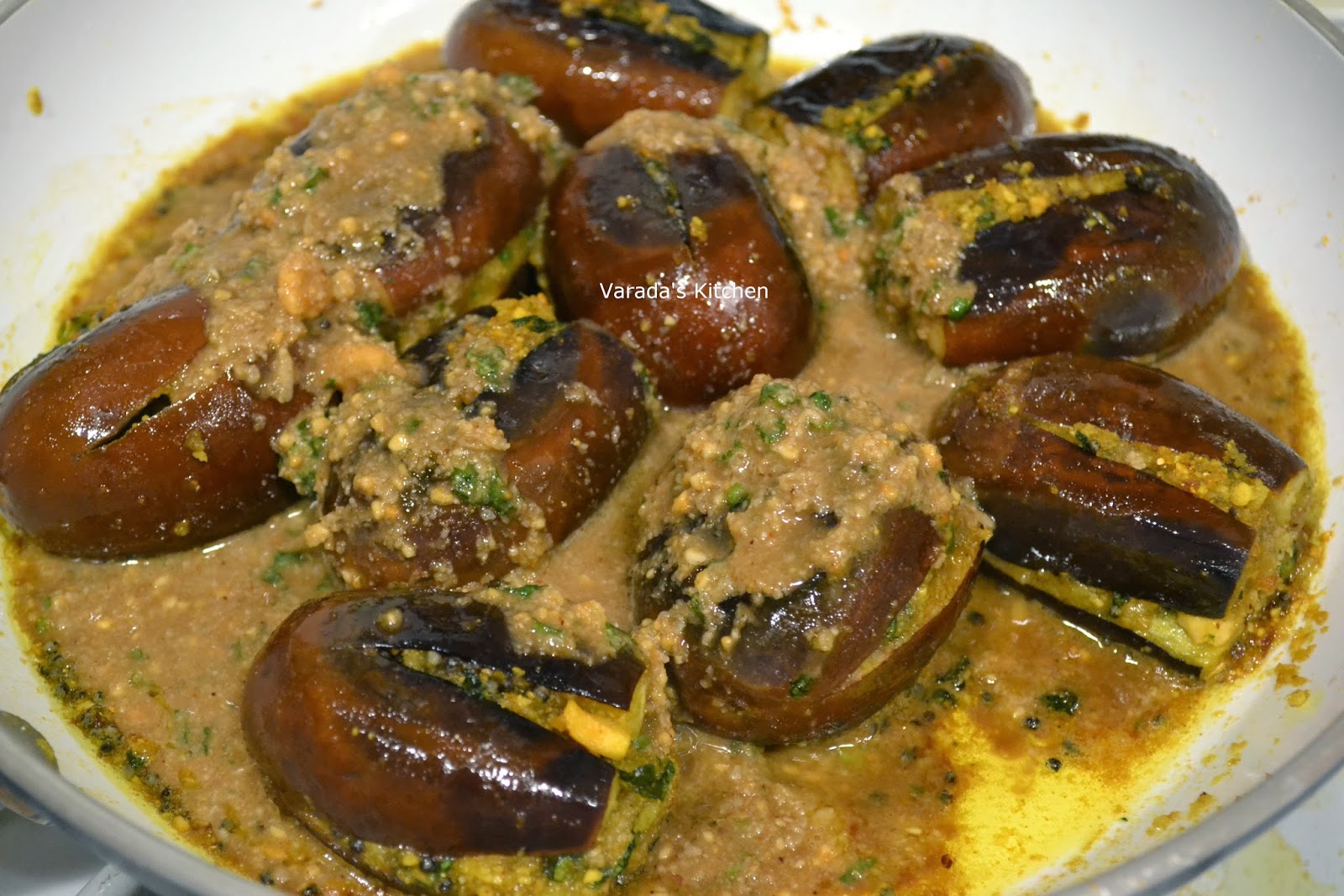
Bharli Wangi is a Maharashtrian delicacy. It is made with small lemon sized eggplant. Roasted dry coconut flakes, peanuts, sesame seeds and tamarind is what gives it the distinct taste. Kala masala (black masala) a unique masala with a very limited shelf life adds to the flavor. When you see the tiny eggplant in the grocery store think of Bharli Wangi.


My mother used to make these often. I am not fond of eggplant but I loved the masala filling. In classic Maharashtrian style the filling is sweet, tart and savory all at the same time. This dish has no onion, ginger or garlic but it is finger licking good. Look here for more information on Maharashtra.

I did not have any plans for making bharli wangi. But I had an appointment at 9 am and reached the area at 8:15 am. I needed to kill time so I decided to walk through a grocery store that I had never been to before. As I walked through the vegetable section I spotted the tiny eggplants. I bought 10. I knew I had everything else I needed in the pantry so on the spur of the moment I decided to make Bharli Wangi for dinner.


You will need
10 tiny eggplant
3/4 cup dry coconut flakes
2 tbsp. sesame seeds
1/3 cup dry roasted peanut powder
1 tbsp. jaggery
1 tsp. paprika
2 tbsp. kala masala
1/4 cup fresh coconut, grated
1/4 cup cilantro, chopped fine
1 tbsp. tamarind paste
5 tbsp. olive oil, divided
salt to taste
1 tsp. mustard seeds
1 tsp. turmeric powder
1/4 tsp. asafoetida

Wash the eggplant and cut off the stems. From the same side as the stem cut the eggplant along the length without going all the way. Now make another cut perpendicular to the first. Repeat for all the eggplants. Soak the eggplant in salted water. Keep aside.


In a pan roast the coconut flakes and sesame seeds.


Grind them to a fine powder. In a bowl mix together the coconut flakes and sesame seeds powder, roasted peanut powder, jaggery, paprika, kala masala, fresh coconut, cilantro and salt with 2 tbsp. of olive oil. Use about a forth of a cup of water to form a paste.


Drain the water from the soaking eggplants. Keep aside about 2 tbsp. of the paste filling. Use the rest to stuff the eggplant. Gently separate the sides of the eggplant and push the filling inside with your fingers. Repeat for all the eggplants. Keep aside.


Heat 3 tbsp. of olive oil in a pan and add the mustard seeds. When they crackle add the turmeric powder and asafoetida. To this add the stuffed eggplant. Let them cook for a couple minutes. Using tongs turn them over. Cover and let them cook for 5 minutes.


Uncover and turn over again. Repeat the process until the eggplant changes color on all sides and is almost cooked all the way through.


Add tamarind paste to the 2 tbsp. of filling that was saved. Add 1/4 cup water (more if you like liquid gravy) and mix together. Add this to the eggplants in the pan, cover and cook for another 5 minutes.


Uncover and check seasoning. Add salt if needed. Continue cooking until the eggplant is cooked completely. Be gentle while handling the eggplant. You do not want to break it apart.


Serve hot with poli.

Tuesday, May 6, 2014

Kanda Batata Rassa (Onion Potato Curry)

Kanda Batata rassa is a very simple but tasty dish. Everything you need should be available in your pantry - Onion, potato and tomato are the main ingredients.


You will need
1 medium onion
2 medium potato
3 small tomatoes
1 Serrano pepper
handful cilantro (optional)
1 tbsp. olive oil
1 tsp. mustard seeds
1/4 tsp. asafoetida
1 tsp. turmeric powder
1 tsp. paprika
1 tsp. agave nectar (or sugar)

Peel the onion and the potatoes. Dice the onion, potatoes and tomatoes. Remove the seeds from the Serrano pepper and mince.


In a large pan heat the oil. Add the mustard seeds. When they crackle add the asafoetida and the turmeric powder. Swirl the pan once and add the onions, potatoes and tomatoes. Add 2 cups of water or enough to just cover the vegetables. Add salt to taste, agave nectar and paprika. Bring to a boil and let it simmer until the vegetables are cooked and the water thickens and almost evaporates.


Serve hot.

Wednesday, April 16, 2014

Kothimbir Wadi (Cilantro Wadi)

Cilantro in my opinion is a very dainty green and has a wonderful flavor. Here is it mixed with besan and sweet and tangy ingredients, steamed and then tempered. Cabbage wadi can also be prepared in exactly the same way. This dish is classified as bhaji or a side as opposed to aluwadi which is classified as a condiment.


You will need
For the wadi
3 bunches cilantro
1 cup besan
1 tbsp. jaggery
1 tsp. tamarind extract
1 tsp. paprika
salt to taste

3 tbsp. olive oil
1 tsp. mustard seeds
1 tsp. turmeric powder
1/4 tsp. asafoetida

Cut off the stalks of the cilantro and wash it. Chop finely and combine with all the other ingredients for the wadi in a bowl. Roll it into one or more logs.


Pressure cook the logs in a pressure cooker. Cut the steamed and cooked logs into disc about 1/2 inch wide. In a wide pan heat the olive oil and add mustard seeds. When they crackle add the asafoetida and turmeric. Add the cooked cilantro discs combine with the tempered oil. Cover and steam for a couple minutes. Adjust seasoning. Add salt, paprika if needed.


Serve hot with poli.

Friday, February 21, 2014

Dudhichya kacharya (Lauki Subzi / Bottle gourd side)

Dudhi or Bottle gourd cooks up really quickly. This is a simple vegetarian side made with bottle gourd.


You will need
1 bottle gourd
1 tsp. mustard seeds
1 tsp. turmeric powder
1/4 tsp. asafoetida
2 tbsp. olive oil
salt to taste
1 tsp. paprika
1/2 tsp. agave nectar or sugar
1 tsp. coriander cumin powder

Chop the dudhi into slices.


Heat olive oil in a pan and add the mustard seeds. When the seeds begin to crackle add the turmeric powder, asafoetida and coriander cumin powder. Let them mix in the oil and then add the dudhi slices.


Cook uncovered until the dudhi is tender. Add the paprika, agave nectar and salt to taste.


Serve hot with poli.

Enjoy!