Showing posts with label Marathi Desserts. Show all posts

Friday, October 10, 2014

Baked Shankarpale

Shankarpale are the diamond shaped sweet cookies that are a part of every Marathi family's Diwali faral. They go very well with the other Diwali staples like chakli, karanji and chivda. They are also a great snack on their own. However, shankarpale along with most other faral recipes made for Diwali are deep fried! In my kitchen, I have put a moratorium on deep fried foods.


I knew I could not bring myself to deep fry the Diwali faral. I had to find an alternate solution for my dilemma. A few months ago I had made baked matar karanji, another Maharastrian deep fried favorite. We liked it a lot. So it was natural I try a baked version of the shankarpale.


I had to experiment to fine tune this recipe and run a few tests before I was able to find the right baking temperature. I first tried 350 F for 9-12 minutes on each side. But the shankarpale had an aftertaste of flour. The color was fine but they were not cooked through. Next I reduced the temperature to 300 F and increased the time to 12-15 minutes on the first side and 9 minutes on the second side. These were better but not the best. The last test was to keep the temperature at 300 F and bake on the first side for 22-28 minutes. The second side was baked for 9 minutes. Perfection!

The ingredients and process of shaping are identical to the traditional recipe. The difference is in how they are cooked.

You will need (for 5 cups of shankarpale)
1/2 cup water
1/2 cup oil (or melted ghee / clarified butter)
1/2 cup + 2 tbsp. sugar
2.5 cups + 2 tbsp. all purpose flour
a pinch salt

pastry cutter or sharp serrated knife

In a pan combine the water, oil and sugar. Put it on medium heat.


The sugar will dissolve and you will begin to see tiny bubbles on the bottom. Just before the mixture comes to a boil turn of the heat. DO NOT LET IT BOIL.


Pour the mixture in a wide bowl. You want to let it cool to a temperature that comfortable to touch but is still warm. Sift and mix the flour into the mixture a little at a time. When all the flour has been incorporated knead the dough well. I put it in my food processor and pulse, you could use an electric mixture with a dough hook. Transfer the soft dough to the bowl and cover with a wet tea cloth.

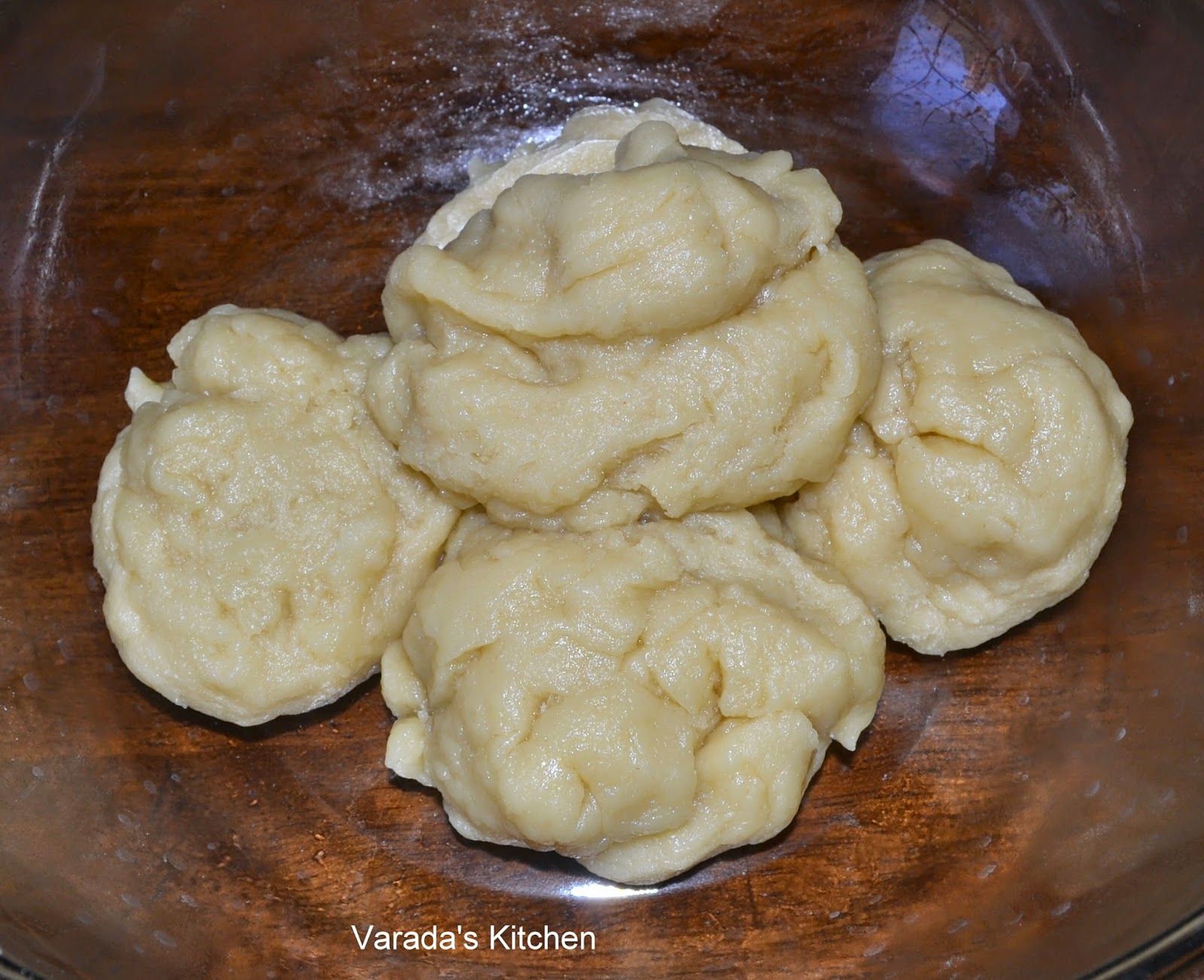
Preheat the oven to 300 F. Divide the dough into tangerine sized portions. I got five. Work with one portion at a time keeping the rest covered with the towel.
Roll out the dough into a 1/4 inch thick disc. If sticky use a drop of oil. Do not use flour.

Using the pastry cutter cut the disc in a criss cross pattern to form diamonds. Collect the pieces and place them under the tea towel. Repeat with the remaining discs.


Place a parchment paper on a cookie sheet. Place the shaped shankaerpale in a single layer on the sheet. Bake for 22-28 minutes until the bottom is browned evenly. Quickly flip the shankarpale over and put them back in the oven for another 6-9 minutes or until the underside is browned.

Take the shankarpale out of the oven and leave them on the sheet for a minute or two. Transfer to a paper towel lined bowl and allow them to cool. Store them in an airtight container once they are completely cooled. They should last 2-3 weeks.


Enjoy!

This is my entry for week two, day one of BM #45 for the theme Festival Special. Check out the Blogging Marathon page for the other Blogging Marathoners doing BM#45.

Tuesday, August 19, 2014

Shira / Sheera / Suji Halwa

The other day after a heavy lunch nobody was in the mood for a full meal for dinner. I offered to make upama when my daughter asked if I could make sheera instead. That was when I realized that I did not have the simple sheera recipe on this space. I have banana sheera and mango sheera but not the plain version. So I decided to set that straight and post this recipe right away.


If you choose to heat the milk and water in a microwavable cup use a mitten when pouring it over the rava. I learnt this the hard way when the steam burnt the fingers of my hand.

You will need
2 tbsp. ghee
1 cup semolina or rava
1 cup water
1 cup milk
1/2 cup + 2 tbsp. sugar

To garnish
Cashews
Raisins
1 pod cardamom
1 tsp. ghee

Heat the ghee in a pan and add the rava. Roast the rava stirring occasionally on low to medium heat taking care it does not burn. Do not let it turn brown.

Combine the water and milk in a microwavable cup and bring to a boil, anywhere from 1 and half to 3 minutes depending upon your microwave. Alternately heat the milk and water in a separate pan on the stove top.

Pour the hot liquid over the roasted rava. Stir to combine and cover. After a minute remove the lid and mix the rava with the now absorbed liquid. Cover and repeat another two times.

In a separate small pan heat the ghee for garnishing and add the cashews. When browned slightly add the raisins. When they puff up turn off heat. Add the cashews and raisins to the sheera. Shell the cardamom and pound the seeds. Add the powder to the sheera. Mix one last time and turn off heat.


Sheera taste great when it is warm.


This is my entry for week three, day three of BM #43 for the theme Healthy Desserts. Check out the Blogging Marathon page for the other Blogging Marathoners doing BM#43.

This is also my entry for week 33 for the 2014 52 week challenge for the them Opposite side of the world.

Sunday, August 10, 2014

Narali Bhaat / Coconut Rice for Narali Pornima

Narali purnima or the full moon during the month of Shraavan. The day when coastal Maharashtra breaks a coconut at the beach to pray for a good post monsoon fishing season. The menu for the day includes the dessert Narali bhaat or coconut rice. Fresh coconut is combined with the local staple - rice, to make this delicious dish.


The menu includes, from the top clockwise, a bowl of tomato dal, potato bhaji, bharli wangi, poli, cucumber koshimbir and in the center narali bhaat.

The recipes for tomato dal and cucumber koshimbir will be updated in the next week.

For narali bhaat you will need
1 cup brown rice
1 cup shredded fresh or frozen coconut
1 scant cup jaggery or sugar
1 clove
1 tbsp. ghee or clarified butter

For garnish
1 tbsp. ghee
a few each of cashews, almonds sliver, raisins etc.
1 pod cardamom

Thaw the coconut if using frozen. Grate the jaggery. Soak the rice for half an hour. Drain and rinse.

Melt ghee in a pan and add the clove. When fragrant in about 1-2 minutes, add the rice with 2 cups of water. Bring it to a boil, lower heat, cover and cook. When the rice is almost cooked, about 20-35 minutes, add the coconut and jaggery. Mix carefully without breaking the rice grain. Let it cook another 5 minutes. During this time the jaggery will melt and coat the rice as it thickens.

Shell the cardamom and pound the seeds to a powder. Heat ghee in a separate pan and roast the cashews, almond slivers and raisins.

When the rice is done turn off heat. Sprinkle the cardamom and garnish ingredients.


Enjoy!

This is my entry for week 32 of the 2014 52 week challenge for the theme favorites.

Monday, March 31, 2014

Shrikhand

I am posting the recipe for Shrikhand on the occasion of Gudi Padva. To make a complete meal for this occasion refer to the Maharashtrian Thali page.


Shrikhand is a very popular dessert and is made on several different holidays like Gudi Padva and Dasara. It can also be made as an evening snack or a dessert to complete any meal.

To make Shrikhand you will need
1 tub nonfat yogurt
1/2 cup sugar
5-6 strands saffron
1 tbsp. warm milk
3-4 pods cardamom
1 pinch grated nutmeg

Invert the yogurt in a fine mesh muslin cloth and tie the ends. Let it hang over the kitchen sink overnight to let the water drain away.


Soak the saffron in the warm milk and keep aside. Untie the cloth and transfer the contents to a mixing bowl.


Mix in the sugar and refrigerate for at least an hour. Shell and pound the cardamom seeds. Add the cardamom powder and nutmeg to the yogurt. Blend together using a hand blender. Fold in the saffron milk and refrigerate for 2-3 hours before serving.


Enjoy the creamy shrikhand.

Tuesday, January 28, 2014

Gulpoli (Jaggery paratha)

Gulpoli is a special poli (flatbread) made on Makar Sankrant, the harvest festival. In coastal Maharashtra Jaggery based dishes are primary made in winter and gulpoli is one of the more popular dishes. As the jaggery filling begins to cool the gulpoli turns crispy. Gulpoli is one of my favorite sweet breads.


I made these before my daughter headed to college. I made just eight gulpoli as it was part of a full meal. The dough for this recipe is mixed with hot oil and is super soft. That makes it easy to roll with the filling. If the jaggery seeps out little it is okay. Caramelized jaggery tastes pretty good.


When I first posted this recipe I had made a Maharastrian thali. I did not have very good pictures when I first posted this recipe. On the 25th of January I have updated the pictures.

You will need (for 8)
For the dough
2 cups wheat flour
1/2 cup all purpose flour
7 tbsp. olive oil

For the filling
1 cup jaggery
1/4 cup besan
2 tbsp. olive oil
2 tbsp. polished sesame seeds
2-3 pods cardamon

Heat the olive oil. Put the flours in a mixing bowl and work the hot oil in. Knead the dough using water. Keep aside for a couple of hours. Knead again and divide into lemon sized balls. 


Dry roast the sesame seeds until they turn pinkish. Let cool and using a blender dry grind to a coarse powder. Shell the cardamom and pound to a powder. Cook the besan well in the oil. Combine in a mixing bowl with all the other ingredients for the filling. Keep aside.

Flatten one ball of dough in the palm of your hands.


Place filling in the flattened dough. Bring the edges together and and close at the top. 


On a working surface roll out a thin poli taking care to see the filling stays inside. 


Cook on a flat griddle pan. Put a few drops of oil while the poli is cooking. Serve hot.


Enjoy!


Sunday, January 19, 2014

Basundi (Creamy milk dessert)

Basundi is a rich creamy dessert. It goes very well with the rest of the Maharashtrian thali. It is made with milk preferably whole milk. I never buy whole milk so to speed the process along I use a little half and half. If you have whipping cream you can add that too.

Basundi is made on special occasions even weddings. Its rich texture completes the meal. Saffron gives the milk its lovely color and slivered almonds and pistachios add taste and a welcome crunch.


You will need
1/3 cup half and half
1 cup low fat or whole milk
1/4 cup whipping cream (optional)
1/2 cup sugar
3 pods cardamom
3-4 strands saffron

Combine the half and half, milk and whipping cream (if using) in a thick bottomed pan. Bring it to a boil stirring frequently to avoid a layer of cream forming on the top and to avoid burning. When the milk is boiling lower heat and continue to simmer until it thickens and reduces in volume to half of what you started with.

Add the sugar and test for taste. If you like it sweeter add more sugar. Bring it back to a boil and turn off heat. Add the strands of saffron. Shell the cardamom and pound to a powder. Add the powdered cardamom to the milk. Continue stirring occasionally until the milk cools down completely. Chill in the refrigerator for a couple hours. Serve cold.