Showing posts with label Marathi Poli Dhirdi Thalipeet. Show all posts

Wednesday, May 11, 2016

Dashmi / Poli with milk / Flatbread with milk

Dashmi is a variation of the everyday poli or bhakri. The dough is mixed with milk instead of water. The resultant bread is super soft and tastes great. To make this vegan I used soymilk.


I made this as a special treat when my daughter was visiting from college. If you make bhakri instead of poli, you can do the same with the bhakri flour. Just mix the dough using milk instead of water.


The real challenge here is to roll out perfect circles of dough after you have folded it into a triangular shape. It takes practice and the initial trials can resemble shapes of countries on the map. But if you stick to it you will get a hang of how to roll out perfect circles.

You will need (15 dashmi)
3 cups whole wheat flour
1 1/2 cups warm soymilk (approximately)
1 tbsp. oil

Place the wheat flour in a bowl. Using milk as needed bind the flour into a soft dough. Add a little milk at a time, you may not need all the milk. When done pour a teaspoon of the oil over the palm of you hand and knead the dough for a minute. Keep aside for 15-20 minutes.

Heat a flat griddle pan on medium heat, I use Lodge cast iron pan. While the pan heats up prepare the work surface. You will need a flat surface to roll the dough and a rolling pin. Keep a little wheat flour handy to sprinkle around the surface when the dough is rolled. In a bowl place the remaining oil and place it on the work surface. Divide the dough in lemon sized portions.


Work with one portion at a time. Roll the ball of dough in the flour, tap out the excess and place the ball on the rolling surface. Roll out to a little bigger than the palm of you hand.


Dunk the tips of your finger in the bowl of oil and apply it to half of the rolled dough. Fold the other half over it making a half moon. Apply the remaining oil from your fingers to what is now the top and fold one more time to give you a triangular shape. Roll this in flour, tap the excess and place it on the rolling surface.


The challenge is to convert this to a circle. Roll out the dough to a thin 1/4 inch thick disc shaping it as close to a circle as you can. Place this one the hot griddle. While you work on rolling the next portion of dough keep an eye on the one placed in the pan. As soon as you see it puffing up turn it over.


Let it cook on the second side. Turn over again. You can use a spatula to plug any steam that is trying to escape allowing the bread to puff up and cook completely making sure it does not burn.


Take it off the heat and continue to work through all the portions of dough.


Enjoy as part of you meal with a side of vegetable!


Note:
* the presence of milk makes it want to burn quickly. Make sure you turn it over or take it off the heat before it burns
* Adjust the heat under the pan such that it take about half a minute for the bread to cook on each side. Lower or turn up heat as needed. Once you get to the optimum you can leave the setting unchanged.


This is my entry for week two, day two of BM #64 for the theme 3 ingredient recipe.
Friday, July 18, 2014

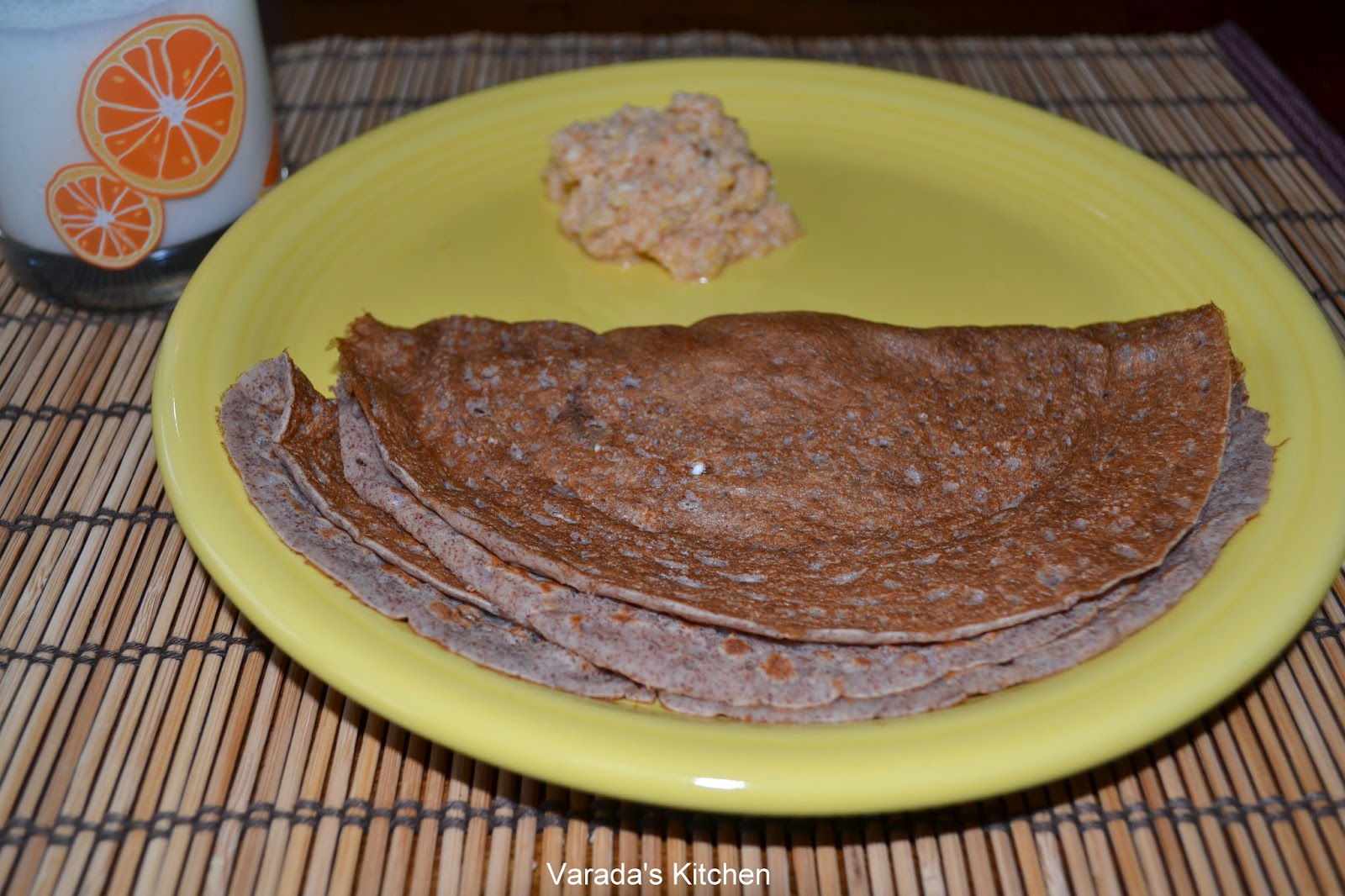
Nachni Urad Dal Dhirdi (Finger Millet Black Gram Dhirdi / Ragi Urad Dhirdi)

What is a dhirda (or plural dhirdi)? It is a kind of crepe popular in Maharashtra. It can be made with any flour or a combination of flours. I have a couple of other dhirdi in this space, bajri and nachni dhirdi and wheat flour and besan dhirdi.


We love the taste of the two flours nachni (finger millet) and urad dal (black gram) together as the result is a soft light dhirda. I do not mill the flours, I use ready made flours available in my local grocery store. You may want to roast the flours before use but I did not do that today. I soaked them a little longer than usual, about 6-8 hours. They made an excellent and filling breakfast.


You will need
For the dhirda
1 cup nachni flour (finger millet flour)
1/2 cup urad dal flour (black gram flour)
salt to taste

For the chutney
1 tbsp. oil
1 tsp. channa dal
1 tsp. urad dal
1 dried red chili pepper
1 Serrano pepper
1 cup shredded coconut

For the tempering
1 tbsp. oil
3-4 curry leaves
1 tsp. cumin seeds
1 tsp. urad dal

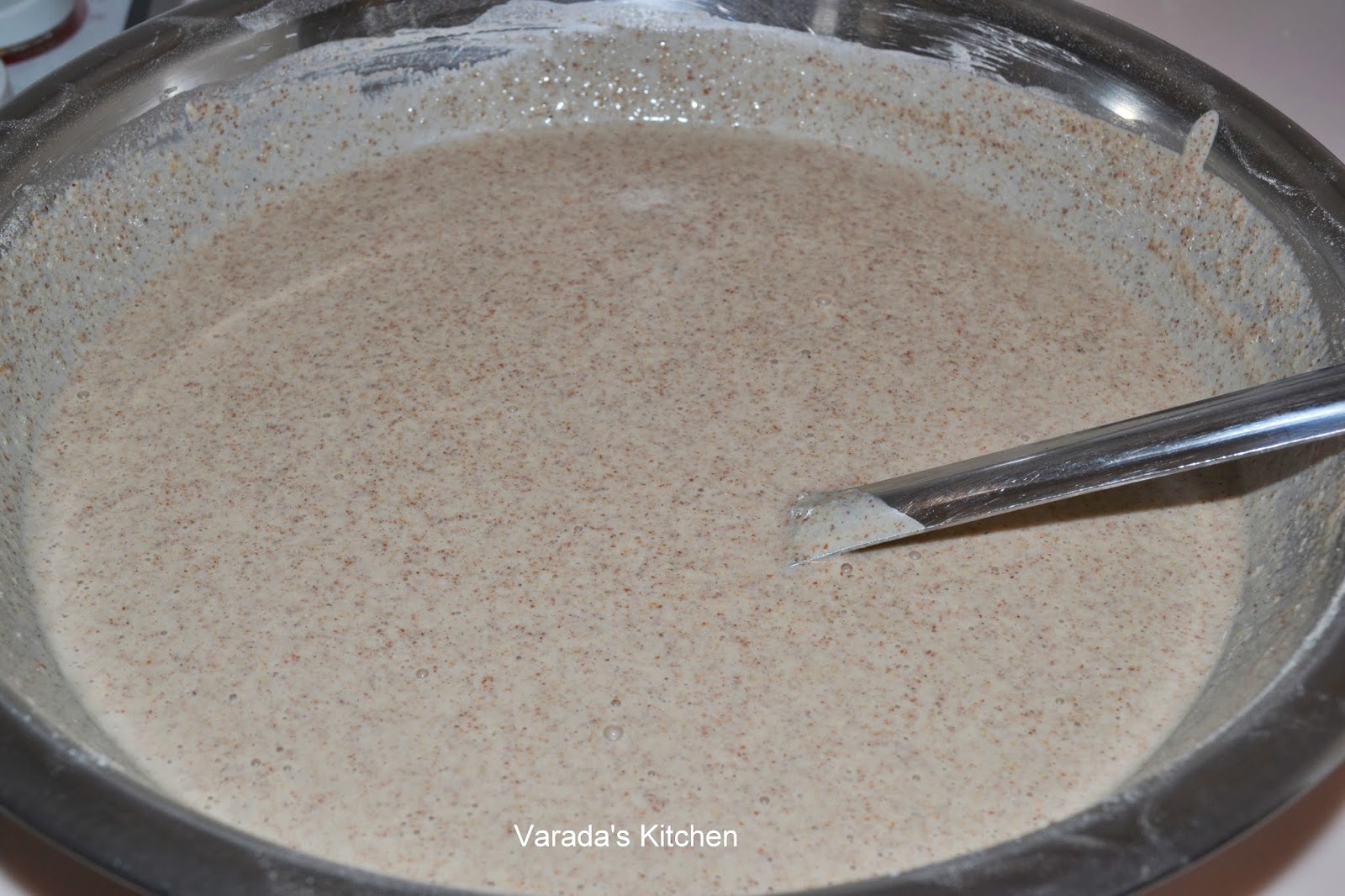
To make the dhirdi combine all the ingredients in a mixing bowl. Add just enough water to form a thick batter. Keep aside for 6-8 hours.


Heat a griddle pan. Wipe with a clean wet towel followed by a towel dipped in a little oil. Pour a ladle of batter on the pan and starting from the center swirl in ever growing circles until the batter is spread in a good sized crepe.


Cover and let it cook under steam. When done flip and cook the other side. Take off heat. Repeat for the remaining batter.


To make the chutney heat the oil in a pan. Add all the remaining ingredients for the chutney except the coconut. Turn off heat. Cool. Pour in half a cup of water and grind it to a paste with the coconut. In a separate pan heat the oil for the tempering. Add the remaining ingredients to the oil. When they change color turn off heat. Let it cool and pour over the top of the chutney.


Enjoy!

This is my entry for week three, day two of BM #42 for the theme Millet.

Thursday, July 17, 2014

Thalipeeth (Mixed Grain Pancakes)

Thalipeeth is one of the healthier pancakes. This is a traditional authentic Maharashtrian recipe. To make thalipeeth you need a combination of roasted flours.


You will need
For the bhajani
1 cup wheat flour
1 cup urad flour
1 cup roasted channa flour (dala)
1 cup nachni flour (finger millet)
1 cup bajri flour (pearl millet)
1 cup jwari or jondhala flour (sorghum)
1/2 cup coriander and cumin powder (instructions below)

For the thalipeeth (to make 6)
3 cups bhajani
1/2 onion
handful cilantro
1 Serrano pepper, minced
salt and paprika to taste

Bhajani is the flour used to make thalipeeth. To make the coriander cumin powder roast a handful of coriander seeds with a scant handful of cumin seeds until fragrant and seeds start changing color. Grind to a powder when cool. Keep aside. Roast each of the flours separately and keep aside. When cool mix them all together. The bhajani can be stored in an airtight container for a few weeks.

To make the thalipeeth combine all the ingredients in a mixing bowl.


Using a little water form a soft dough. Knead for a couple minutes and let it rest for about 15 minutes.


Heat a griddle pan. Divide the dough into 6 portions. Knead one portion well and flatten on a greased ziploc bag or wax paper. Using your finger make three holes in the center.


Place the prepared thalipeeth on the hot griddle. Pour a few drops of oil in each of the holes. Cover and cook on medium high heat for a few minutes until brown.


Uncover and flip over. Cook the other side until brown. Remove from heat. Repeat for each portion.


Thalipeeth is usually eaten with fresh made butter. But you can have it with a savory side or pickle.


This is my entry for week three, day one of BM #42 for the theme Millet.

Friday, May 30, 2014

Batatyachi Poli (Alu Paratha / Batata Poli)

The simplest of all stuffed poli is batatyachi poli. Cilantro and spices are added to boiled, mashed potato and used as the filling.


You will need
For the dough for 12
2 1/2 cups wheat flour

For the filling
2 medium potatoes, pressure cooked or boiled
handful cilantro, chopped
1 Serrano pepper, deseeded and minced
2 tbsp. onion, chopped (onion)
1 tsp. turmeric powder
1 tsp. cumin powder
1 tsp. paprika
1 tbsp. lemon juice
salt to taste

Pressure cook the potatoes for 10 minutes or boil them until well done. Meanwhile using water for a dough with the wheat flour. Pour a few drops of oil on the palm of your hand and knead the dough well. Keep aside. Mash the potatoes and all the other ingredients. Mix until just combined and keep aside. Do not over do it or the potatoes will become slimy and sticky. Divide into 12 portions and keep aside.


Heat a griddle pan. Divide the dough into 12 equal portions.


Take one portion and roll it into a ball. Flatten it on the palm of your hand. Place one portion of filling in it.


Pull up the sides of the dough around the filling and close at the top.


Using flour to prevent sticking roll out the filled dough into a disc.


Add a few drops of oil to the pan and place the rolled disc on it. Let it cook until a few brown spots appear on the side. Flip it over and cook the other side.


Repeat for the remaining portions of dough and filling.


Enjoy with pickle. Makes a filling packed lunch too.

Wednesday, April 16, 2014

Bajri and Nachni Dhirdi (Pearl Millet and Finger Millet Crepes)

Dhirdi is Maharashtrian crepe. It is an easy way to use up left over flour of any type. Today I used bhajri (pearl millet) and nachni (finger millet). I have made dhirdi with wheat flour, jwari flour, even singada flour. You could add a pinch of baking soda but if you soak it for a couple of hours you will not need it.


You will need
1 cup bhajri flour
1 cup nachni flour
2 tbsp. All purpose flour or rice flour
1 tsp. paprika
1 tsp. sugar
salt to taste
Oil

Sift the flours into a mixing bowl. Combine all the other ingredients except the oil in the bowl. Using a little water whisk into a thick batter. Keep aside for about 2 hours. Stir the batter and thin it out to a pouring consistency.


Heat a griddle pan with a cover. Pour a ladle full of batter in the middle of the hot griddle. Using the back of the ladle spread the batter in ever increasing circles until the batter covers the griddle in a thin layers. Add a few drops of oil and cover with the lid for a few minutes.


Uncover the pan. The crepe should be covered in a fine web of holes. Flip it over and cook the other side. When brown take it off the heat. Repeat with the remaining batter.


Enjoy!


Dhirdi taste best when hot so make them when everything else is ready.

Sunday, March 16, 2014

Puran Poli

Today is Holi the festival of colors. It is a celebration of spring and new life. It is also a symbolic gesture to burn away everything old and start over.


Dry color pouches or water guns are used to spray color on friends and family. Growing up everyone from our neighborhood celebrated holi. There was an advantage in going out early. As children came out to play the gang grew bigger. Everyone was in light colored clothing and by the end of the morning the clothes would be stained with all the different colors. People were hard to recognize as the faces were colored. At the end of the morning we would all return home to take a shower and wash off all the color. Though most of the color washed off some telltale sign would remain and that would be a conversation starter in school the next day.


In Marathi homes puran poli is made specially on holi. It is eaten either with ghee (clarified butter) or with milk. Puran is a mixture of cooked channa dal and jaggery. Katachi amti is a dish prepared from the water in which the channa dal is cooked. Puran poli and katachi amti is a classic combination. I served the puran poli with beetroot salad, instant jaggery and mustard pickle and bharli wangi (stuffed eggplant).

You will need
For the puran
1/2 cup channa dal
1/2 cup jaggery
1/4 cup sugar
2 pods cardamom
nutmeg

For the poli
1 cup whole wheat flour
1 tbsp. all purpose flour
2 tbsp. olive oil, divided
1 tsp. salt

To make the puran
Wash and pressure cook the channa dal in 1 1/2 cups of water. Do not let it get mushy. Strain and reserve the water.


Mash the channa dal and put it in a pan. Add the jaggery and sugar. Set it on medium heat to cook. Initially the sugar and jaggery will dissolve cause the mixture to form a watery paste.


As it cooks it will thicken. When a spoon left in the center of the mixture stands for a few seconds on its own you know the puran is done. At this time the color will be a light brown if you used light colored jaggery. Take it off the heat. Shell the cardamom and pound the seeds to a powder. Add the powder to the puran. Using the rough side of your box grater grate some nutmeg in the puran. Mix it and let it cool completely.


To make the poli
In a mixing bowl sift in the flour and salt. Rub in the olive oil. Using water form a dough and knead well. Pour a tablespoon of oil on your palm and knead the dough until it is soft and smooth. Cover and keep aside for 2 hours.

After 2 hours use a little olive oil to knead the dough again.  Divide the dough into five portions. Heat a griddle pan. Flatten one portion of the dough in the palm of your hand. Place a fifth of the puran in it.


Close the dough over the top of the filling to form a ball.


Roll it out on a working surface to form a thin disc.


Put a few drops of oil on the heated pan and place the rolled poli on it. Sprinkle some oil over the top. Let the poli cook and when browns spots appear flip it over. Cook the other side and take it off the heat.


Repeat with the remaining portions of dough.


Enjoy!

Sunday, December 22, 2013

Wheat Flour Dhirdi (Pancakes)

Dhirdi is a Maharastrian favorite. It can be made with a combination of any flour you have in the house. Today I used wheat flour with besan, semolina and rice flour. The dough can be flavored any way you like.


You will need
2 cups whole wheat flour
1 cup rice flour
2 tbsp. besan
2 tbsp. semolina
1/2 onion, chopped
a bunch cilantro, chopped
1 tsp. ginger garlic paste
1 tsp. turmeric powder
1 tsp. coriander and cumin powder
1 serrano pepper, deseeded and minced
5 curry leaves
salt to taste

In a mixing bowl, mix all the dry ingredients.


Add about 2 cups of water and whisk together. The resultant batter should be thick but pouring consistency. Add more water if needed.


Heat a griddle pan. Coat with oil an in a couple minutes wipe clean with moist paper towel. On the hot griddle put a ladle of the mixture. Cover and cook for about 4 minutes. Uncover, turn over and cook for another 4 minutes.


Take off heat and serve hot with tomato chutney.