Today I am posting some recipes from Maharashtra. Every day this month I will post a recipe from a different state in India.
Maharashtra, more specifically the Konkan region, is the place my family originally comes from. Three or four generations ago my family moved and eventually settled in Pune, Nashik, Mumbai and nearby cities. I did not grow up in Maharashtra but I have always considered myself a Maharashtrain. I cook Maharashtrian (Puneri) food regularly. I also dabble in Maharashtrian tribal artwork. Warli is the very well known folk art from Maharashtra. It features dancing or working people along with their tools and their cattle. The art has a flowing moving aspect to it that makes it very attractive.

Maharashtra is a large state and food varies with region and class as in the rest of India. My association with Maharashtra has been mainly confined to the north western region of the state. Last fall my father on my request brought me a book of traditional Marathi recipes first published in the 1960s. It has among other things instructions on how to use the stone grinder (pata varvanta). I wanted the book to look at age old Maharashtrian recipes. Some are these are popular today but some have been completely forgotten.
A unique chivda chutney in the book made me want to plan a meal around it. I have made a traditional
Maharashtrian thali before. This time all I wanted to do was to make dishes that go well with each other as a meal. There is no onion, ginger or garlic in this meal. Except for the chutney the rest of the dishes are on my regular rotation.
A Maharashtrian meal generally starts with dal/waran/sada waran with rice. The next course is
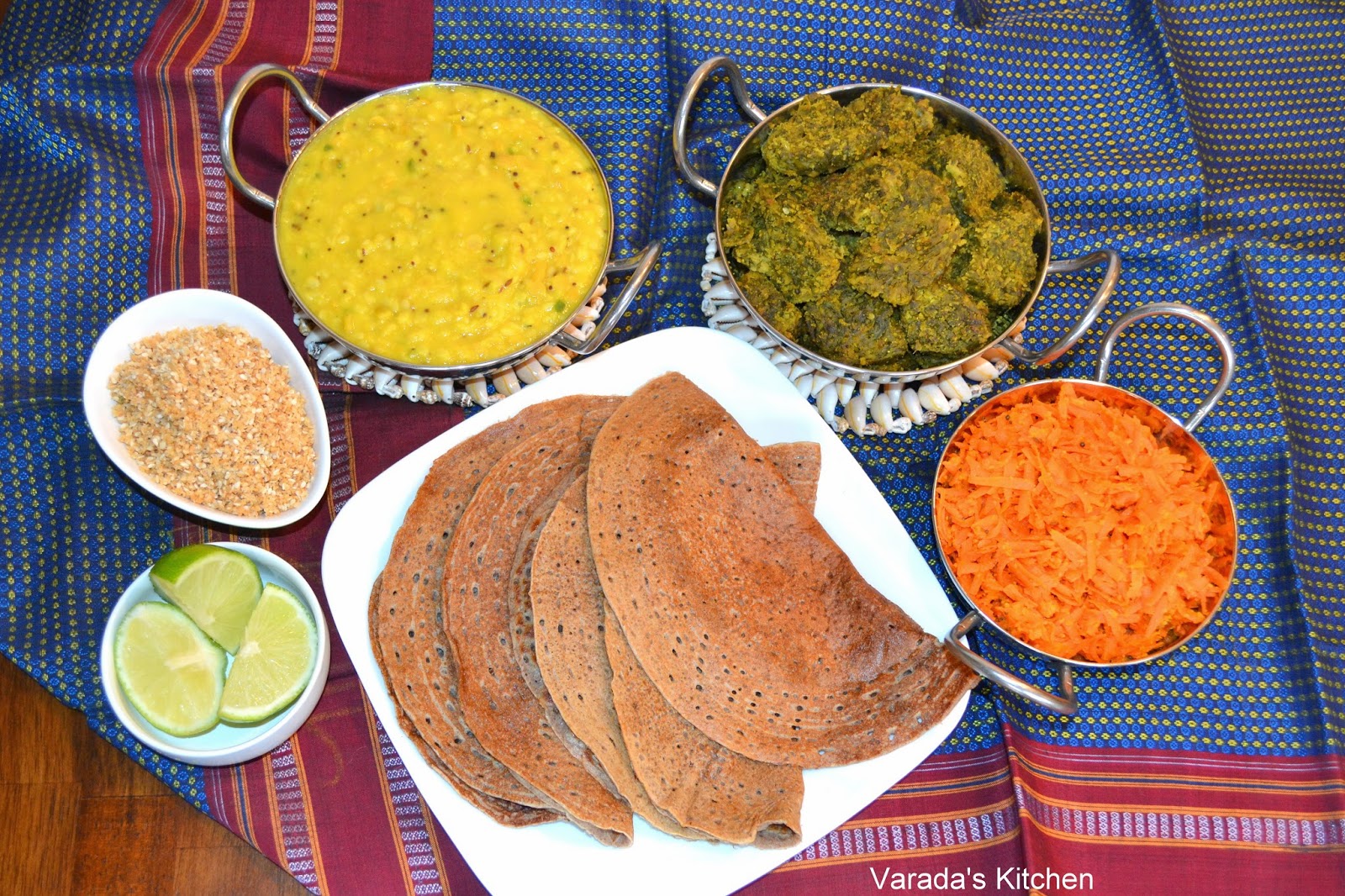
poli or chapati. The last course is yogurt or buttermilk with rice. Unlike as is done in South India the yogurt is mixed with the rice once it is on your plate. In my house rice is always optional and rarely cooked. Here is the simple Maharashtrian meal.
The menu
Chivda Chutney
Maharashtrian chutney is made with vegetables, dals, fruit etc. Green chili pepper is added for heat. If needed tamarind or lime juice is added for tartness and jaggery is added as the sweet flavor. Other variations of chutney are dangar and chatka. Chivda chutney is a crisp roasted chutney with chivda like texture. It is made of peanuts, sesame seeds and coconut. The only other ingredients are green chili pepper and salt.
Tikhat Gajar Pachadi (Savory carrot salad)
Pachadi is a salad that can be made with a variety of vegetables or fuit. Sometimes one or more vegetables are used. Here is
Khamang Kakadi which is a cucumber pachadi. Similarly radish, tomatoes etc. can be used to make pachadi. Unlike a Koshimbir a pachidi does not contain yogurt. Here is an example of
beetroot koshimbir made with yogurt. Pachadi contains raw vegetables seasoned with salt, paprika, sugar and lime juice. Tamarind or jaggery is never added to a pachadi.
Kothimbir wadi (cilantro cubes)
Cilantro in my opinion is a very dainty green and has a wonderful flavor. Here is it mixed with besan and sweet and tangy ingredients, steamed and then tempered.
Cabbage wadi can also be prepared in exactly the same way. This dish is classified as bhaji or a side as opposed to
aluwadi which is classified as a condiment. The basic Maharashtrian tempering used in sides consists of oil, mustard seeds, asafoetida (a pinch) and turmeric. Some sides call for cumin seeds instead of mustard seeds. For fasting foods only oil and cumin seeds are used.
Panchmel daliche waran (five dal waran)
Ambti and waran are the two common dal preparations. Unlike
ambti the phodni (tempering) for waran is added at the end of the cooking period. Instead of adding dal to the tempered oil the oil is poured over the top of the dal. Sada waran is dal without tempering. You can see it poured over the rice in this
Maharashtrian Thali. Another difference is that ambti, as the name suggests, has a sour ingredient like kokum or tamarind added to it while waran does not. Typically lime juice (always on the plate) is added to the waran by the person eating it, if and when they need it. I have made a simple waran with five different dals - tur, mung, channa, masoor and urad.
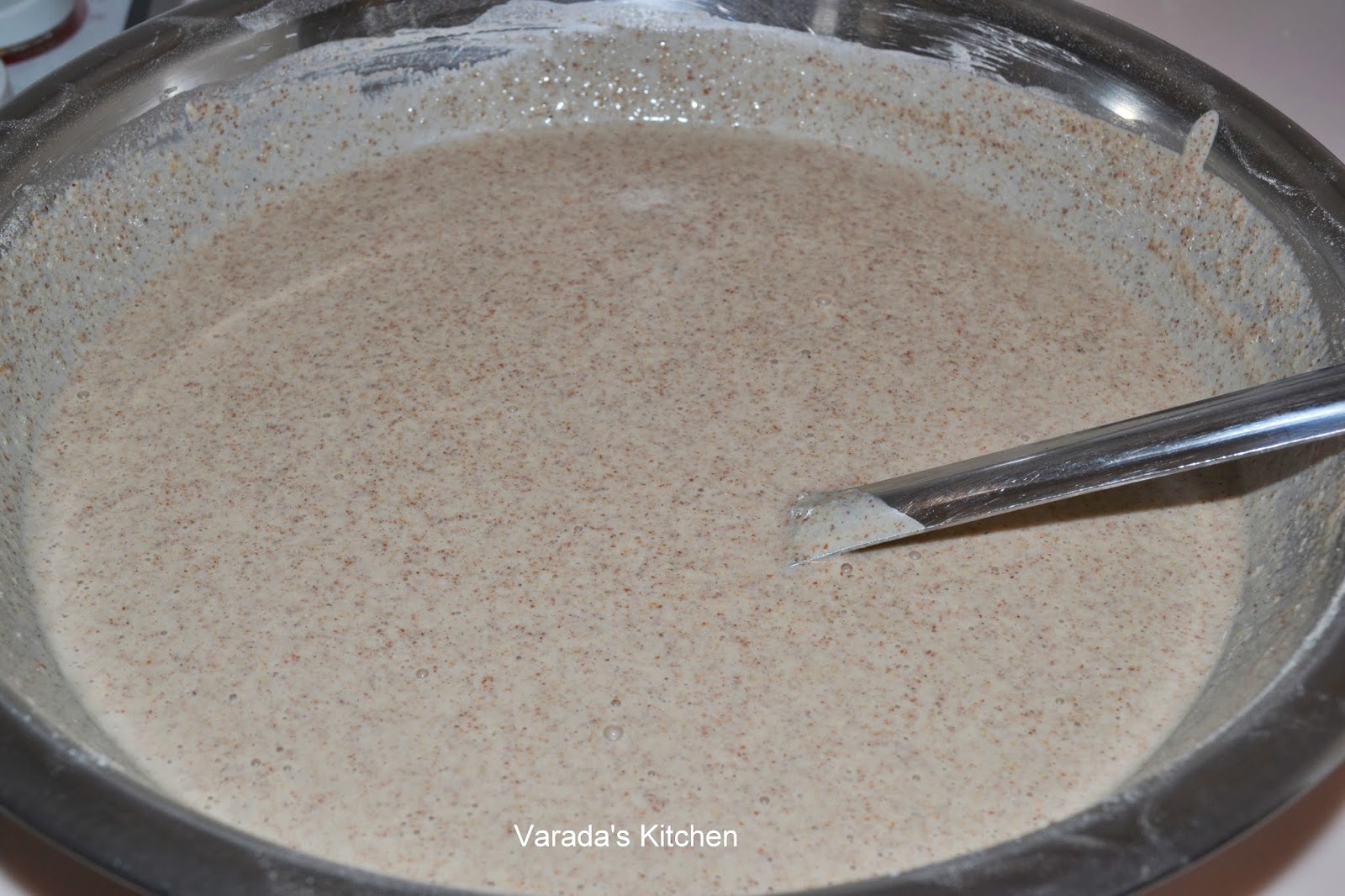
Bajri and Nachni Dhirdi
Poli (chapati) or jwari/bajri bhakari is common in Maharashtrian households. There are several other alternatives. You could make stuffed chapati, sweet chapati (
puran poli or
gul poli), dashmi (chapati with milk instead of water), gakar, thalipeet or dhirdi. Dhirdi is a crepe that can be made with any flour you may have on hand like this
wheat flour dhirdi. Today I used Bajri (pearl millet) and Nachni (finger millet) flours.
My goal was to create a simple meal to showcase the different foods on an everyday dinner plate. I realize I left out a very wide variety of foods like rice,
usal, palebhaji,
golabhaji or a dessert. But that is the beauty if cooking. The variety is endless.