Today I am posting a recipe from Arunachal Pradesh. Everyday this month I will post a recipe from a different state in India.
Arunachal Pradesh is one of the northeastern states of India and part of it borders China. It is a naturally beautiful state located mostly in the Himalayas.
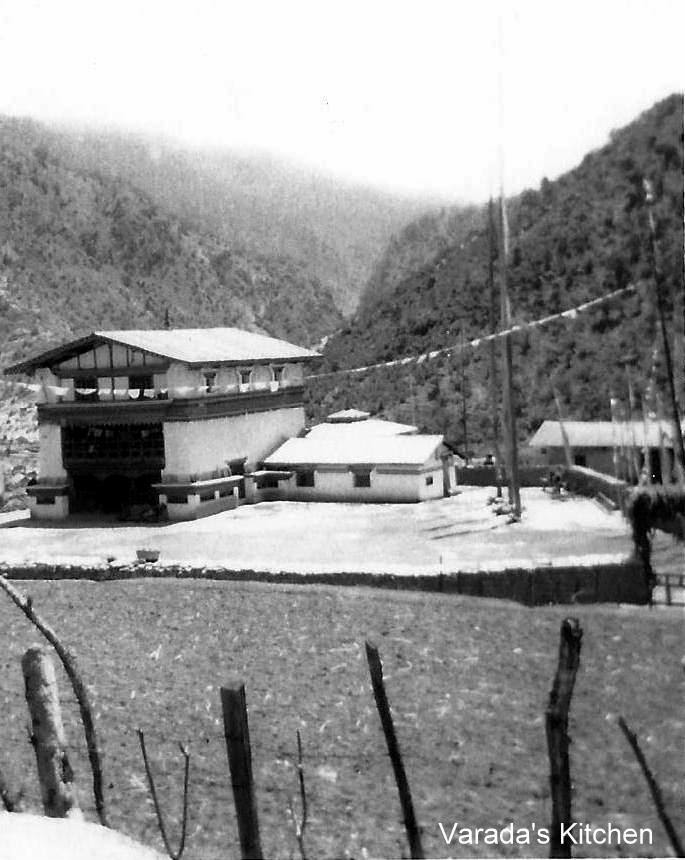
While I was looking up information on this state I found this travelogue in Mid Day. One sentence caught my attention. "On a particular trip to Arunachal Pradesh, in the small town of Bomdila" the author had momos. Bomdila: a small town in a valley close to the Chinese border. I have been there as a child of 8 or 9 years. It was a very long and tiring bus ride to get to the town. Today a special permit is needed to visit the area. Back then there were no restrictions to visit Arunachal Pradesh. The B&W pictures below are from that trip.
I vaguely remember the endless streams, the shaky bridges over them and lots of flags. We were in a very rural area visiting my uncle who was in the Army. We were there for about a week. Everywhere you looked you saw mountains. Growing up in Goa, hilly terrain was not new to me. But this was different, the elevation was much higher than sea level. And the air was crisp and clean.
We went for long walks to take in the countryside. I remember a walk in the mountains and everyone getting tired and thirsty. That is when someone local pointed to a stream of water coming straight out of the mountain. True mountain spring water, refreshing, fresh and most importantly, not bottled.
After revisiting the fond memories of that trip I decided I wanted to make momos. Momos can be found in all the northeastern states of India. They are believed to have been brought to the region by traders from Tibet. I got this recipe from a bunch of different places so I cannot credit any one site here. The momos were delicious.
You will need
For the shell
1/2 cup rice flour
salt to taste
1 tsp. olive oil
For the filling
1/2 cup cabbage, shredded
1/4 cup onion, diced
1 tbsp. olive oil
salt to taste
To make the filling
Heat oil in a pan. Add the onion and cabbage to it. Cook until tender. Add salt to taste and let it cook another minute before turning off the heat. Keep aside.
To make the dough for the shell
In a mixing bowl mix rice flour and salt with a little water. Knead into a soft ball. Using the olive oil to coat your fingers knead again and keep aside for 15-20 minutes.
To put it together
Put water in the steamer and bring it to a boil. Grease the steamer tray with olive oil.
Divide the dough into five small portions. On a working surface, using rice flour roll out one of the portions into a disc.
Place the disc in the palm of your hand and work one side of the disc into folds.
Place a teaspoon of filling inside.
Seal the top to form a lopsided empanada.
Place it on a greased streamer tray. Repeat with the other portions of dough.
Steam for about 10 minutes on medium high heat. Turn off heat and let the momos rest for a few minutes. Take them out of the steamer and serve.
I served them with ketchup and they were delicious.
Wednesday, April 2, 2014
Tuesday, April 1, 2014
Whole Wheat Cinnamon Swirl Bread
This is a 100% whole wheat cinnamon swirl bread. Instead of strong flour
I used regular chapati flour. I have found that when I use this flour I
have to use a little more liquid than called for in the recipe.
I used organic apple juice in place of orange juice. I also added raisins to the cinnamon sugar to add a naturally sweet taste. I left the eggs out altogether and used a third of a teaspoon of vanilla extract to coat the bread. I halved the recipe and ended up with a roll instead of a loaf.
I have made other cinnamon breads like the Swedish Coffee Bread and the Beautiful Cinnamon Bread. This bread is a simpler version. I am very happy with the end result and will definitely make this recipe again.
You will need
For the Starter
1/4 cup water
1/2 cup whole wheat flour (I used chapati flour)
Fourth of 1/4 oz Fleischmann instant yeast packet
For the Dough
The remaining packet of yeast
3/4 tsp. salt
1 1/2 tbsp sugar
2 tbsp. nonfat dry milk powder
2 1/2 tbsp butter
1/4 cup milk
1/4 cup + 1 tbsp. apple juice
For the filling
1/3 tsp. vanilla extract
1 tbsp. cinnamon powder
3 tbsp. sugar
a handful of raisins
Prepare the starter by mixing the water, flour and yeast. Keep at room temperature overnight. It should get puffy.
Mix in the rest of the ingredients and knead for about 10 minutes. Cover and keep aside until double in volume or about an hour and a half.
Prepare the loaf pan by placing parchment paper on the inside.
Punch down the risen bread gently and roll into a sheet. Ensure the short side is a little shorter than the length of your loaf pan.
Flip the sheet over so the smooth side is on the bottom. This is something I forgot to do. Sprinkle the vanilla extract all over the sheet and spread it.
Mix the cinnamon and sugar together in a bowl.
Sprinkle the cinnamon sugar all over the sheet of dough. Sprinkle raisins all over the sheet.
Starting from one of the short sides fold tightly into a roll. Seal the ends and the seam. Smooth it out by rolling back and forth on the working surface.
Place the roll in the loaf pan. Ideally the roll should rise to touch the sides of the pan and eventually rise above the pan. However, since I halved the recipe mine turned out to be a log.
Let it sit covered for an hour and a half.
Preheat the oven to 350 F. Place the risen roll into the oven for 20 minutes.
Cover the top with an aluminium foil and bake for another 30 minutes.
Take it out of the oven and transfer to a cooling rack.
Cool completely before slicing.
Serve with a beverage of your choice.
I have made other cinnamon breads like the Swedish Coffee Bread and the Beautiful Cinnamon Bread. This bread is a simpler version. I am very happy with the end result and will definitely make this recipe again.
You will need
For the Starter
1/4 cup water
1/2 cup whole wheat flour (I used chapati flour)
Fourth of 1/4 oz Fleischmann instant yeast packet
For the Dough
The remaining packet of yeast
3/4 tsp. salt
1 1/2 tbsp sugar
2 tbsp. nonfat dry milk powder
2 1/2 tbsp butter
1/4 cup milk
1/4 cup + 1 tbsp. apple juice
1 1/4 + 2 tbsp. whole wheat flour
For the filling
1/3 tsp. vanilla extract
1 tbsp. cinnamon powder
3 tbsp. sugar
a handful of raisins
Prepare the starter by mixing the water, flour and yeast. Keep at room temperature overnight. It should get puffy.
Mix in the rest of the ingredients and knead for about 10 minutes. Cover and keep aside until double in volume or about an hour and a half.
Prepare the loaf pan by placing parchment paper on the inside.
Punch down the risen bread gently and roll into a sheet. Ensure the short side is a little shorter than the length of your loaf pan.
Flip the sheet over so the smooth side is on the bottom. This is something I forgot to do. Sprinkle the vanilla extract all over the sheet and spread it.
Mix the cinnamon and sugar together in a bowl.
Sprinkle the cinnamon sugar all over the sheet of dough. Sprinkle raisins all over the sheet.
Starting from one of the short sides fold tightly into a roll. Seal the ends and the seam. Smooth it out by rolling back and forth on the working surface.
Place the roll in the loaf pan. Ideally the roll should rise to touch the sides of the pan and eventually rise above the pan. However, since I halved the recipe mine turned out to be a log.
Let it sit covered for an hour and a half.
Preheat the oven to 350 F. Place the risen roll into the oven for 20 minutes.
Cover the top with an aluminium foil and bake for another 30 minutes.
Take it out of the oven and transfer to a cooling rack.
Cool completely before slicing.
Serve with a beverage of your choice.
Edible Spring Bread Basket / Braided Bread Basket
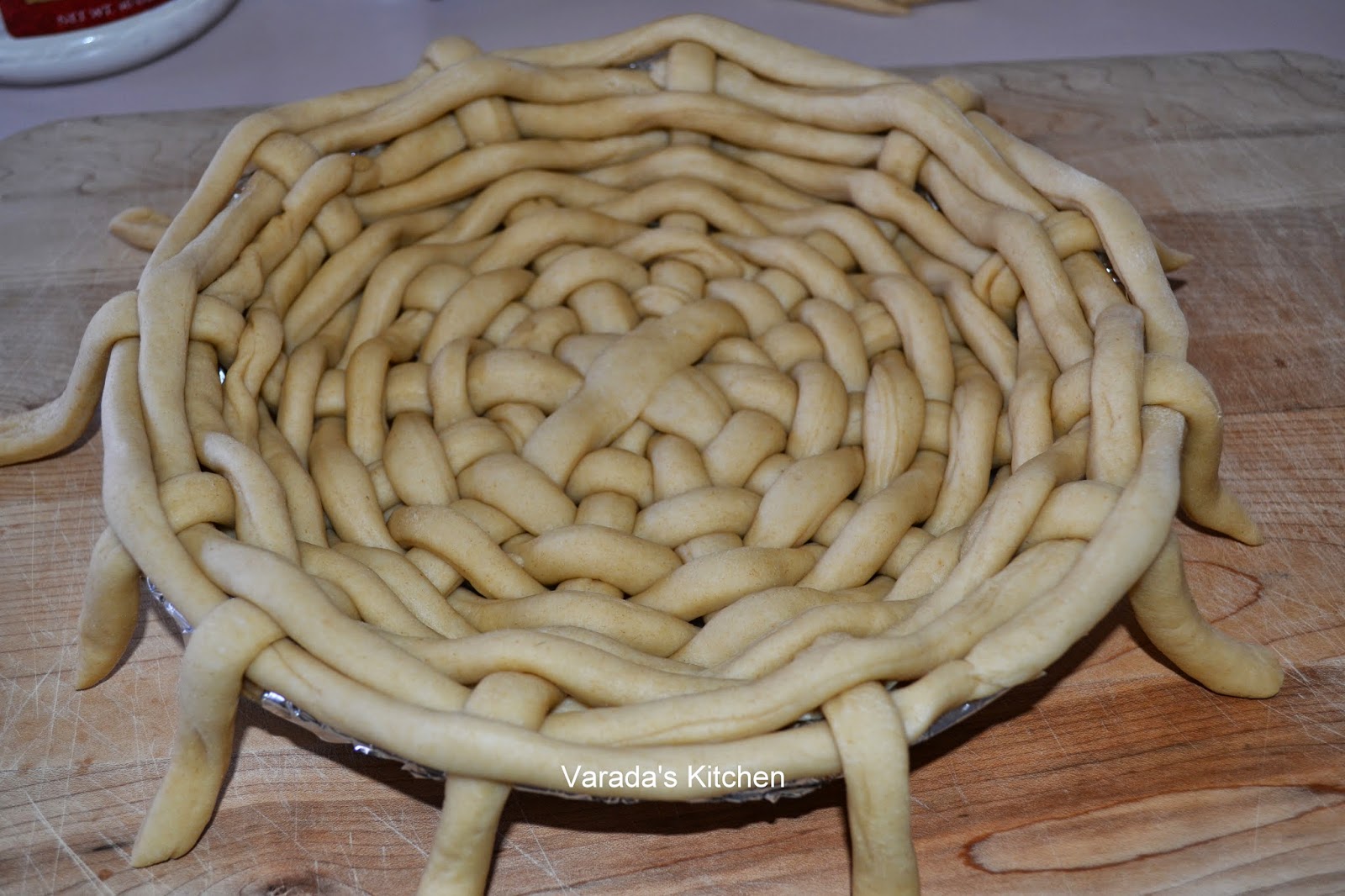
After I had made an edible bread basket I had this vision of a shallower basket that could be used as a centerpiece decorated with flowers. I used the recipe for Basic Bread Dough for Shaping. Once the dough had risen I used a pie baking dish as my mold to create the basket. I used the back of a mixing bowl as the mold for the handle. I was pretty happy with the result.
Beginner baking skills is all you need to try this basket. If you can braid hair then you can braid the handle and the finished edge on the basket.
You will need
Basic Bread Dough
1 egg for wash
Prepare the dough as per the instructions in basic bread dough for shaping. Preheat the oven to 350 F.
Prepare a pie baking dish by covering the inside of the dish with aluminium foil. Transfer the dough to a floured working surface and roll it into a large rectangle with a rolling pin. The thickness should be about 1/4 of an inch. The picture before is close to half an inch thick.
Using a pizza cutter cut 1/4 inch wide strips.
Place one of the strips on the work surface separate from the others and roll it with the palm of your hand to form a rope. Repeat for another five strips and place them on the pie dish.
Roll more strips into rope. Weave the rope through the 6 base ropes placed in the dish. Work in concentric circles. Always start under so the joints are hidden.
Continue until the entire surface is covered.
Take three ropes and form a braid.
Place the braid on the edge of the prepared basket and press down gently.
In a separate bowl beat the egg with 2 tbsp. water. Apply the wash over the entire surface of the basket using a pastry brush. You can skip the egg wash if you want, it is mainly for color.
Bake the basket for 20 minutes. If the edge browns while the center is undone, cover the edges with aluminum foil.
Continue to bake for another 10-15 minutes until the center is golden brown.
Prepare the handle by braiding 3 more ropes. Place it on an inverted oven safe mixing bowl that has been covered in aluminum foil. You may have to use your imagination to ensure you have a gentle curve on the handle.
Place the handle on the basket and attach with toothpicks.
Decorate with flowers. I used carved vegetables, red pepper, leek, radish and spring onion for the flowers.
Enjoy the yummy bread when you are done with using it as a centerpiece.
Beginner baking skills is all you need to try this basket. If you can braid hair then you can braid the handle and the finished edge on the basket.
You will need
Basic Bread Dough
1 egg for wash
Prepare the dough as per the instructions in basic bread dough for shaping. Preheat the oven to 350 F.
Prepare a pie baking dish by covering the inside of the dish with aluminium foil. Transfer the dough to a floured working surface and roll it into a large rectangle with a rolling pin. The thickness should be about 1/4 of an inch. The picture before is close to half an inch thick.
Using a pizza cutter cut 1/4 inch wide strips.
Place one of the strips on the work surface separate from the others and roll it with the palm of your hand to form a rope. Repeat for another five strips and place them on the pie dish.
Roll more strips into rope. Weave the rope through the 6 base ropes placed in the dish. Work in concentric circles. Always start under so the joints are hidden.
Continue until the entire surface is covered.
Take three ropes and form a braid.
Place the braid on the edge of the prepared basket and press down gently.
In a separate bowl beat the egg with 2 tbsp. water. Apply the wash over the entire surface of the basket using a pastry brush. You can skip the egg wash if you want, it is mainly for color.
Bake the basket for 20 minutes. If the edge browns while the center is undone, cover the edges with aluminum foil.
Continue to bake for another 10-15 minutes until the center is golden brown.
Prepare the handle by braiding 3 more ropes. Place it on an inverted oven safe mixing bowl that has been covered in aluminum foil. You may have to use your imagination to ensure you have a gentle curve on the handle.
Place the handle on the basket and attach with toothpicks.
Decorate with flowers. I used carved vegetables, red pepper, leek, radish and spring onion for the flowers.
Enjoy the yummy bread when you are done with using it as a centerpiece.
Pesarattu (Mung Dosa / Moong Dosa)
This is the first day of a new challenge. Today I am posting a recipe from Andhra Pradesh. Everyday this month I will post a recipe from a different state in India. By the end of this month I will have featured on my blog 30 recipes from 30 different states.
I have never visited Andhra Pradesh but have always had a lot of friends from there. At one point when I was working in Bangalore I wanted to visit Hyderabad just to see their famous chudi (bangles) bazaar. I have not made it there yet. Maybe someday.
To kick off to this challenge I wanted to make a signature Andhra dish. I looked through my wish list of 'recipes to try or repeat' and found pesarattu. A few months ago my sister visited a cousin and mentioned the delicious Pesarattu breakfast prepared by our sister-in-law. That had got me thinking about making Pesarattu and I had added it to my long list of 'recipes to try or repeat'.
Every part of the world has some form of a crepe. In India they are called dhirdi, chila or dosa depending upon where you are from. These crepes are made with every conceivable grain and pulse that can be soaked, ground to a batter and spread on a pan. The grains that cannot be used in crepes by themselves are mixed with others that can. Rice flour is added to make the crepes light.
Pesarattu is a crepe made with mung and usually eaten for breakfast in Andhra Pradesh. While it can be eaten on its own, it is also paired with upama.
While mung is usually soaked in water for 6-7 hours before it is ready to be ground, I had to soak it for about 20. The 32 F overnight temperature and the fact that I left it on the wide ledge by the kitchen window may have had something to do with it. Needless to say no one got pesarattu for breakfast. They had to eat it for dinner.
My husband who grew up in North India likes to eat it with yogurt. My father would have liked to eat it with cheese. In his view yogurt and cheese are interchangeable as both are dairy. When he is visiting my daughter reaches for the cheese too. I served it with dal as we had it for dinner.
You will need
For the batter
1 cup mung soaked overnight
2 tbsp. rice flour
1/2 ginger garlic paste
1 tsp. ground cumin
1 tsp. red chili powder
salt to taste
4 tbsp. onion, chopped
Grind the soaked mung to a paste. Add all the other ingredients and mix well. Thin out the batter if needed. If should be a little thicker than pouring consistency.
Heat a griddle pan. Add a few drops of oil and spread it around with a spatula. Place a ladle of batter in the center of the pan and using a circular motion in ever increasing circles form a large circular disc. Sprinkle a little onion and cover to cook.
When the bottom turns brownish in color, flip it over. Cook the other side. Flip it over again. Fold the edges in to form a triangle.
Turn over and serve.
Note:
Wipe the pan clean with a moist paper towel before pouring batter on it.
After every two or three pesarattu's srpinkle some oil on the pan.
I have never visited Andhra Pradesh but have always had a lot of friends from there. At one point when I was working in Bangalore I wanted to visit Hyderabad just to see their famous chudi (bangles) bazaar. I have not made it there yet. Maybe someday.
To kick off to this challenge I wanted to make a signature Andhra dish. I looked through my wish list of 'recipes to try or repeat' and found pesarattu. A few months ago my sister visited a cousin and mentioned the delicious Pesarattu breakfast prepared by our sister-in-law. That had got me thinking about making Pesarattu and I had added it to my long list of 'recipes to try or repeat'.
Pesarattu is a crepe made with mung and usually eaten for breakfast in Andhra Pradesh. While it can be eaten on its own, it is also paired with upama.
While mung is usually soaked in water for 6-7 hours before it is ready to be ground, I had to soak it for about 20. The 32 F overnight temperature and the fact that I left it on the wide ledge by the kitchen window may have had something to do with it. Needless to say no one got pesarattu for breakfast. They had to eat it for dinner.
You will need
For the batter
1 cup mung soaked overnight
2 tbsp. rice flour
1/2 ginger garlic paste
1 tsp. ground cumin
1 tsp. red chili powder
salt to taste
4 tbsp. onion, chopped
Grind the soaked mung to a paste. Add all the other ingredients and mix well. Thin out the batter if needed. If should be a little thicker than pouring consistency.
Heat a griddle pan. Add a few drops of oil and spread it around with a spatula. Place a ladle of batter in the center of the pan and using a circular motion in ever increasing circles form a large circular disc. Sprinkle a little onion and cover to cook.
When the bottom turns brownish in color, flip it over. Cook the other side. Flip it over again. Fold the edges in to form a triangle.
Turn over and serve.
Note:
Wipe the pan clean with a moist paper towel before pouring batter on it.
After every two or three pesarattu's srpinkle some oil on the pan.
Subscribe to:
Posts (Atom)