Tuesday, September 2, 2014

Bulgarian Meal

A couple months back I tried this very beautiful Sunflower bread. It is baked for special occasions in Bulgaria. Other than this bread I did not know much about Bulgarian food. I was totally undecided on whether I could come up with a complete meal from a region about which I knew next to nothing.


Then I saw these peach cookies or Praskovki and my mind was made up. These cookies are so pretty. They are shaped and painted to look like peaches. I simply HAD to cook a meal from Bulgaria so I could try out these cookies.


As I researched some more I found out that a lot of different vegetables are grown in Bulgaria. I was very pleasantly surprised to find a host of vegetarian dishes with ingredients that I routinely stock up. I made shopska, a vegetarian salad that is very popular with the locals and tourist alike. It is very addictive for a dish with such simple ingredients so it is no surprise it is so popular. Though fresh vegetables play a big part, the cheese makes this dish. It is nothing like cheese we had tasted before. I would not try this dish unless you had the right cheese or else you would be eating something very different not shopska. :)


Cucumber salads are common in a large part of the world. Tarator (cold cucumber soup) is the Bulgarian variation. I rounded out the meal with patatnik (potato pancakes). My daughter loves potatoes so I have tried to make as many variations of potato dishes as possible. I also got a chance to try two new ingredients.


Sirene is a white cheese from Bulgaria made with sheep's milk. I visited the local Mediterranean store and found Rodopa brand Bulgarian Feta in brine. Research told me this was the cheese I was looking for. There is a lot of controversy on the use of the word 'Feta' in the European Union but I will side step that and focus on the taste of this cheese. The cheese comes soaking in brine and has a salty taste. But that is where the similarity with the feta cheese we get in the regular grocery stores in the US ends. This cheese is light and full of rich flavor and blends very well with the vegetables it is served with.


Rose hip jam is the second new ingredient I used. I found some rose hip butter at the local Mediterranean store. It turned out to be the kind of jam I like, not overtly sweet.

As they say in Bulgaria, Dobar Apetit!

Here are the recipe for the dishes on the menu
And for dessert


This is my entry for the letter B for BM #44 for the theme Around the world in 30 Days. Check out the Blogging Marathon page for the other Blogging Marathoners doing BM#44.


Praskovki (Bulgarian Peach Cookies)

Praskovki, a peach shaped delicious cookie, is a specialty from Bulgaria.


The cookies are made with a moist sticky dough. Then their centers are scooped out and mixed with a buttery sugar and walnut filling. This filling is used as glue to get two cookies to stick to one another forming the shape of a peach. The cookie is then painted red and yellow to resemble a peach.


The filling is traditionally made with walnuts but I have lately developed an allergy to walnuts so I used almonds instead. I am sure that altered the taste but never having tasted the original we would never know. I did get a little carried away with the quantity. For some reason I did not realize I would end up with so many. But this is a make ahead cookie and it tastes better the next day. I refrigerated them and my daughter had them as dessert for a whole week.

The recipe was adapted from here

You will need
For the cookie
1 cup sugar
2 eggs
1/2 cup vegetable oil
1/2 cup + 2 tbsp. yogurt
1 tsp. baking powder
1/2 tsp. baking soda
3 cups all purpose flour

For the filling
1/2 cup crushed walnuts (I used almonds)
3 tbsp. unsalted butter
1/2 cup milk
1/2 cup sugar
hollowed out crumbs from cookie center
2 tbsp. rose hip jam

To finish
4 tbsp. milk
a few drops red color
a few drops yellow color
sugar as needed to roll the finished cookie in

Combine the sugar and eggs in a bowl and beat until light and fluffy. Add the vegetable oil, yogurt, baking powder and baking soda. Beat together to combine. Add 2 1/2 cups of the flour and knead well. The dough will be very sticky. Form a ball, cover and keep aside for an hour.

Preheat the oven to 350 F. Mix in the reserved 1/2 cup of flour to the dough and knead well. Divide the dough into lime size portions and place on a baking sheet covered with parchment paper. Make sure you have an even number of cookies.


Bake for 12-15 minutes until the cookies are cooked through but their color has not changed. The under side of the cookies may be brown but the tops should be white. Cook on a rack.


While the cookies are cooling make the filling. Crush the walnuts or almonds and combine with all the other ingredients.


Scoop out the center from the under side of the cooled cookie and add it to the filling. Repeat for all the cookies.


Fill the scooped out area of two cookies with the filling. Place them together back to back to form a peach. Wipe off any filling that oozes out but keep enough to let it show. Repeat with all the cookies.


To finish mix in the colors with the milk. This is your chance to let your inner artist bloom. Either make two bowls and color with yellow and red separately or mix them together and color the cookies orange. I did both.


Roll the painted cookie in sugar and place it in a muffin cup. The muffin cup prevents it from sticking until they are dry. Cover and keep aside overnight.


Enjoy!

Tarator (Bulgarian Cucumber Soup)

Tarator or cold cucumber salad is perfect for a hot summer day. What surprised me was how close in taste it is to cucumber koshimbir that we make in Maharashtra. The only difference was the use of crushed walnut and dill leaves instead of the peanuts and cilantro that we use.


The recipe called for walnuts but lately I have developed an allergy to walnuts so I used almonds instead.

Recipe adapted from here.

You will need
2 cucumber, chopped
2-3 springs dill, minced
2 cloves garlic (optional, I did not add any)
3 cups yogurt
10 - 12 walnuts, crushed (I used almonds)
salt to taste
1 tbsp olive oil

Mince the garlic , if using, and add to the yogurt. Whisk the yogurt and combine with the other ingredients in a bowl. Add water to adjust consistency if needed. Chill before serving.

Shopska (Vegetable Salad)

Shopska is a salad that is served covered with sirene cheese. It is very additive. It is little wonder it is so popular in Bulgaria. I have to say the cheese makes the dish giving the vegetables a lovely flavor that is hard to put into words.


I am glad I took the time to find this Bulgarian cheese in our local Mediterranean store. Sirene or Bulgarian Feta is not available by the name 'Feta' because of European politics. It is a white spongy cheese made from sheep or goat's milk. The cheese goes very well with the vegetables and the salad was amazingly good.


This recipe is mainly adapted from here and here. I read a lot of travelogues with pictures of this dish as presented in restaurants in Bulgaria and used that information for the presentation.

You will need
1 cup Sirene cheese (white sheep or goat cheese)
2 salad tomatoes
1 cucumber
1 red or yellow bell pepper
a bunch cilantro (the original uses parsley but we don't like it)
1 tbsp. olive oil
salt to taste if needed

Chop the tomatoes, pepper and cucumber. Mince the cilantro and combine it with the other chopped vegetables in a bowl. Add oil and mix together. Plate the vegetables and shred the cheese over the top. If needed add salt. I did not add any.

Patatnik (Bulgarian Potato Pancake)

Patatnik or potato pancake is very common in Europe. This is the Bulgarian variation. The addition of cheese and cilantro make the pancake very flavorful. They can be served as a side in a meal or even for breakfast.


The addition of sirene (white cheese) enhanced the flavor a lot. I cooked it on the stove top but Patatnik can also be baked in the oven. After I made these pancakes I invested in a cast iron pan. The next time I make them I will bake them in my cast iron pan.

Recipe adapted from here.

You will need
3-4 potatoes
1 egg
1/2 cup Sirene cheese
a bunch cilantro
a bunch parsley (I did not add any)
salt to taste

Olive oil for pan

Wash, peel and grate the potatoes. Combine with the other ingredients. Heat oil in a pan and add a thin layer of the potato mixture. Brown on both sides. Take it off the heat. Repeat with remaining potato mixture. Serve hot.

Monday, September 1, 2014

Austrian Meal

Remember the song 'Raindrops on roses ...' from the Sound of Music? - 'cream colored ponies and crisp apple strudel, doorbells and sleigh bells and schnitzel with noodles' it went . I took inspiration from the song and prepared a meal of noodles (and a few other dumplings) with apple strudel. I am presenting a vegetarian Austrian noodles and dumpling meal today.


It was hard trying to put together a meal from a country where the main dishes are usually not vegetarian and the non-vegetarian component is usually the entire dish. That leaves little room to convert the recipe to a vegetarian one. Noodles and dumpling are the exceptions and so I decided to make a meal with them. Kärntner Kasnudeln or noodles from the province of Carinthia are one of our favorite cheese noodles. I have made them a few times before. Though each noodle has to be shaped individually they are easy to put together and taste great. This was the dish around which I built the menu.


In addition to these noodles I made spinach, bread and potato dumplings. The spinach and the bread dumplings are a great way to use up day old bread rolls. I know this sounds backward but for this meal I made a couple extra bread rolls the previous day so I would have leftovers. I served Gruyere white sauce over the dumplings. I made Apfelstrudel for dessert using a wonderful homemade flaky pastry.


I have always wanted to make Apfelstrudel but did not care for puff pastry. This recipe uses a homemade pastry that is really easy to make. The rolled out pastry sheet is then filled with apples, breadcrumbs, raisins and cinnamon. The kitchen smelt great for hours after I baked it.


Fresh cheese is needed to make Kärntner Kasnudeln and I use quark. Whole Foods used to keep this cheese in stock. But apparently they have very few takers for this cheese in summer and stopped stocking it. They offered to order it for me. I had to wait two weeks until it arrived but it was worth the wait.


My original plan was to make Kasespatzel or Austrian macaroni and cheese along with all the other noodles and dumplings. The day I made this meal, I had planned to cook Kasespatzel after I was done with everything else. But once I looked at the quantity of the food already cooked I decided to drop it. The spinach, bread and potato dumplings are usually eaten fresh. However, I made the bread and potato dumplings a day ahead. My plan was to make this meal for dinner. But it took too long and the light was fading so I decided to stop, store what was already prepared and start off again the next day. In hind sight I think that was a wise decision. Because of texture issues we enjoyed the not-so-moist dumplings more than we would have enjoyed the just-out-of-the-water-bath ones. Once the meal was served everyone enjoyed it and that was the most important part.

As they in Austria, Guten Appetit!

Here are the recipes for the dishes on the menu
And for dessert

Gruyere Cheese Sauce

Gruyere white sauce is usually served over dumplings. But you can use it in any recipe that calls for a cheese sauce. This sauce is really an application of the béchamel sauce with Gruyere cheese. The cheese thickens the sauce. This is a nice to know basic recipe that can be pulled out of the hat when needed.


Use a cooking cheese like gruyere or substitute Asiago or Romano.

You will need
4 tbsp. butter
4 tbsp. all purpose flour
1 cup cold milk
1/4 cup gruyere
salt and black pepper to taste

Melt the butter in a pan over medium heat. Watch the pan, I looked away and burned one batch of butter. Add the flour and whisk continuously until the flour is blended in and the mixture cooks and turns a light brown color.


Add cold milk. If you cook with wine use 3/4 cup milk and 1/4 cup dry white wine. Let the mixture cook for about 5 minutes. Add shredded cheese and season with salt and pepper. Turn off heat and whisk until smooth. Tastes best when hot.


Note: If you like it a runnier texture increase the amount of milk or decrease the amount of flour.

Semmelknödel (Bread Dumpling)

Bread dumplings are a great way to use up day old bread. If you have ever been in a situation where you have bread made the previous day and do not know what to do with it, make these dumplings. They are delicious.


I made extra bread rolls the day before I planned this dish so I would have day old bread to use.

Recipe adapted from here
You will need for 12 dumplings
150 gm old bread rolls
1/2 onion
25 cilantro
30 gm oil
150-200 ml milk
1 egg
salt
25 gm flour

Cut the bread rolls into small cubes. Dice the onion and chop the cilantro. Heat oil in a pan and add the bread cubes, onion and cilantro. Saute until the bread is toasted and crispy.


Add the milk, egg and salt. Mix well so that the liquid is absorbed. Add enough flour to form a sticky mixture that holds it shape. Form about 12 bite size dumplings. Bring water to a boil and add a little salt to it. Add the dumplings.


Cook for about 10 minutes or until the dumplings float to the top.

Erdäpfelknödel (Potato Dumpling)

The vast array of Austrian dumplings is astounding. As a quick and easy side dish Austrian potato dumplings are hard to beat. They are tasty without overpowering the meal.


Recipe adapted from here
You will need for 8 dumplings
2 medium potatoes
100 gm flour
35 gm semolina
20 gm butter
1/2 an egg (I used the other half for spinach dumplings)
nutmeg
salt

Boil the potatoes. Peel and run them through a shredder. Combine with all the other ingredients. Make 8 bite size dumplings.


Boil water in a pan and add some salt. Add the dumplings to the boiling and cook for about 10 minutes.

Spinatknödel (Spinach Dumpling)

Spinach dumplings caught my eye because they are rich in protein and are filling. They are a great way to use up day old bread.  I used fresh baby spinach with my delicious day old home made bread rolls. The dumplings were very tasty. They are usually eaten hot with a cheese sauce. The recipe for the cheese sauce is here.


We found they tasted great even after they were reheated.

Recipe adapted from here
You will need (for about 10 dumplings)
80 gm day old bread rolls
1/4 cup milk
100 gm spinach
1/2 an egg (I used the other half for potato dumplings)
40 gm breadcrumbs
15 gm flour
30 gm parmesan cheese
a little fresh grated nutmeg
salt and pepper

Cut the break rolls into pieces and soak them in the milk. Keep aside. Blanch the spinach in a boiling water for a minute. Drain and keep aside until cooled. Squeeze out the liquid from the spinach. Drain the milk from the soaking bread. Add the bread and spinach to the food processor and pulse until combined. Add the breadcrumbs and flour and pulse a few more times. Transfer to a bowl and add the other ingredients. The mixture should hold together like dough. Divide the mixture into bite size dumplings. Bring water to a boil and add the dumplings.


I cooked them in two batches to prevent them sticking. Cook the dumplings in the water for about 10 minutes or wait for them to float to the top and cook a couple minutes longer.

Apfelstrudel / Apple Strudel

Apfelstrudel is a very delicate dessert made with thin flaky pastry dough. The dough is rolled on a cloth which makes it easier to handle. The thinly rolled out dough is made thinner by running it over the knuckles of your hand. When done it is possible to read a newspaper or see the pattern on the tea cloth on which it is laid.


Crisp apfel (apple) strudel is a well known Austrian dessert. For those of us not living in Europe it was made popular by the song 'Raindrops on roses and whiskers on kittens...' from the Sound of Music.


The thin pastry is really easy to make at home. The process of rolling and stretching the dough is very calming and enjoyable. Simple pleasures in our otherwise busy lives. When you plan on making this pastry block out a half hour to take your time with it and experience the joy of being able to make see-through pastry.

You will need
For the dough
125 gm flour
60 ml water
2 tsp oil
salt pinch

For the filling
600 gm apples
70 gm sugar
50 gm breadcrumbs
40 gm butter
40 gm raisins
2 tsp cinnamon

40 gm butter
powdered sugar for topping

Ideally peel the apples before slicing. I had invested in organic apples so I decided not to peel them. Next time I will. Prepare the breadcrumbs by browning them in a little butter. Soak the raisins in water so they plump up. Melt the butter.


Prepare the dough by mixing all the ingredients except water. Add water a little at a time until you have a soft non-sticky dough. Let it rest for an hour. Preheat the oven to 425 F. Flatten the dough and using a rolling pin roll it into a flat pastry. Transfer it to a tea towel. Use flour to prevent the dough from sticking to the towel.


Apply a thin layer of butter on the top and let it rest for a 10 minutes.


Now roll it as thin as you can go. Lift it up with the knuckles of your hands and roll the dough over the knuckles to spread it thin. When you are done you should be able to clearly see the towel through the pastry.


Spread the remaining butter, breadcrumbs and drained raisins.


Now add the apples slices.


Turn in the long sides of the dough. Start rolling from one of the shorter sides to make a thick tight roll. Take care to not stretch the dough too thin so it does not tear.


Seal the edge with a little butter.


Transfer the roll to a baking sheet covered with parchment paper. Brush on some butter.


Bake for 40 minutes until the strudel is brown and crisp. Sprinkle some powdered sugar over the top. You can eat it either hot or cold.

Sunday, August 31, 2014

Eis und Heiss (Ice cream With Strawberry And Raspberry Sauce)

Eis und Heiss literally translates to 'cold and hot'. This hot and cold dessert is super simple to make and very delicious. When I found the recipe here I simply had to make it. It was perfect for a hot summer day. Ice cream with fresh berry sauce poured over the top - hot and cold


I found some really fresh raspberries and strawberries in Whole Foods. There is no real recipe here. Heat the fruit in a pan until the juices begin to flow.

Let the fruit cook in their own juice on low heat for about 5-10 minutes. If the fruit is very juicy and the sauce looks runny add a little cornflour to the juice to thicken it. Turn off heat. Let it cool a little. While it is warm pour over ice cream and enjoy!

This is my entry for week 36 of the 2014 52 week challenge for the theme hot and cold.

Thursday, August 28, 2014

Kale Paratha

Kale is one of the most abundantly available green in the US. It is nutritious, a great source of protein. These parathas are a great way to include kale in your diet.


I am not at all fond of greens that are cooked with spices in water giving you a sodden mess. There is no way I am making that ever in my kitchen. You know what I am talking about. The one that kids have the most problem with during dinner time. I would never torture my kid with that. Instead these parathas are eaten happily.


Kale can be bitter and needs to be boiled to remove the bitterness.

You will need for 5 parathas
10 leaves kale
1 1/2 cups whole wheat flour
1 tsp. paprika
1 tsp. cumin powder
1 tsp. carom seeds (ajwain or ova)
salt to taste
1 tsp. olive oil

oil to cook the parathas

Wash the leaves and cut off the stem. I even take off the center vein on the leaves. Boil in water or steam for about 4-5 minutes. Drain and wash in cold water. Puree in a blender to a fine paste using little or no water. Transfer to a bowl and add all the ingredients except the oil.


Form a dough with the water in the kale paste. If needed add additional water as needed. Using the teaspoon of oil knead the dough until soft. Keep aside for 10-15 minutes and then divide into 5 portions.


Heat a griddle pan and keep oil handy. Roll out a portion of the dough using flour as needed to prevent it from sticking to the rolling surface.


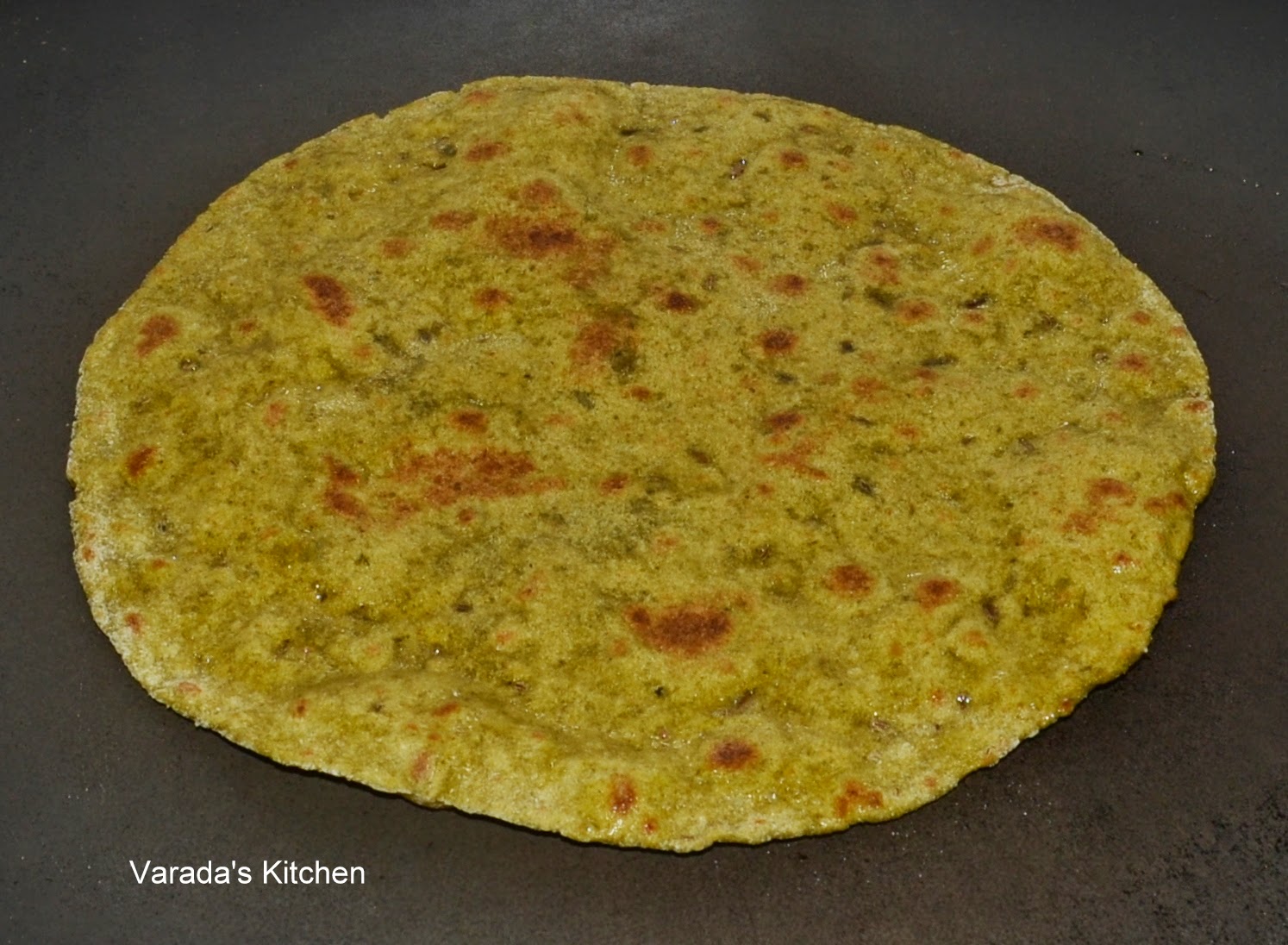
Place the rolled out paratha on the hot griddle. Let it cook for a couple minutes. Flip it over. As the paratha is green in color the brown spots may not be as visible. Do not overcook. Drizzle a few drops of oil on the top.


When the underside is cooked flip the paratha over again so that the oiled side touches the pan. Roast until done. Flip once more to roast the second side. Take the paratha off the heat.


Repeat for all the portions.


Enjoy with a vegetable side or pickle.