Thursday, April 24, 2014

Dal Bati (Dal Baafla / Dal and Wheat dumpling)

Today I am posting a recipe from Rajastan. Every day this month I will post a recipe from a different state in India.

Dal Bati is a baked wheat dumpling eaten with dal. It is a very popular preparation in Rajastan found at street side food vendors, in restaurants and homes.


The Dal Bati is dunked in ghee before it is served. I do not believe I could ever dunk anything in ghee, not even a modak. I skipped the ghee altogether. I am sure that affected the taste but since we do not know how it tastes with the ghee we did not miss anything.

I do not have a single source for this recipe. I did read up recipes on the web and talked to a friend for this recipe.

You will need
For the Bati
3 cups whole wheat flour
1 cup semolina
3 tbsp. olive oil
1/2 tsp. baking powder

For the dal
1 cups toor dal
1/2 cup masoor dal
1 onion
4-5 cloves garlic
1 Serrano pepper
2 tomatoes
3 tbsp. olive oil
1 tsp. mustard seeds
1 tsp. cumin seeds
1 tsp. turmeric powder
1/4 tsp. asafoetida
1 tsp. ginger paste
1 tbsp. coriander cumin powder
1/2 tsp. paprika
salt to taste

For the dal topping
2 tbsp. olive oil
1 tsp. cumin seeds
1/4 tsp. paprika

To make the Bati
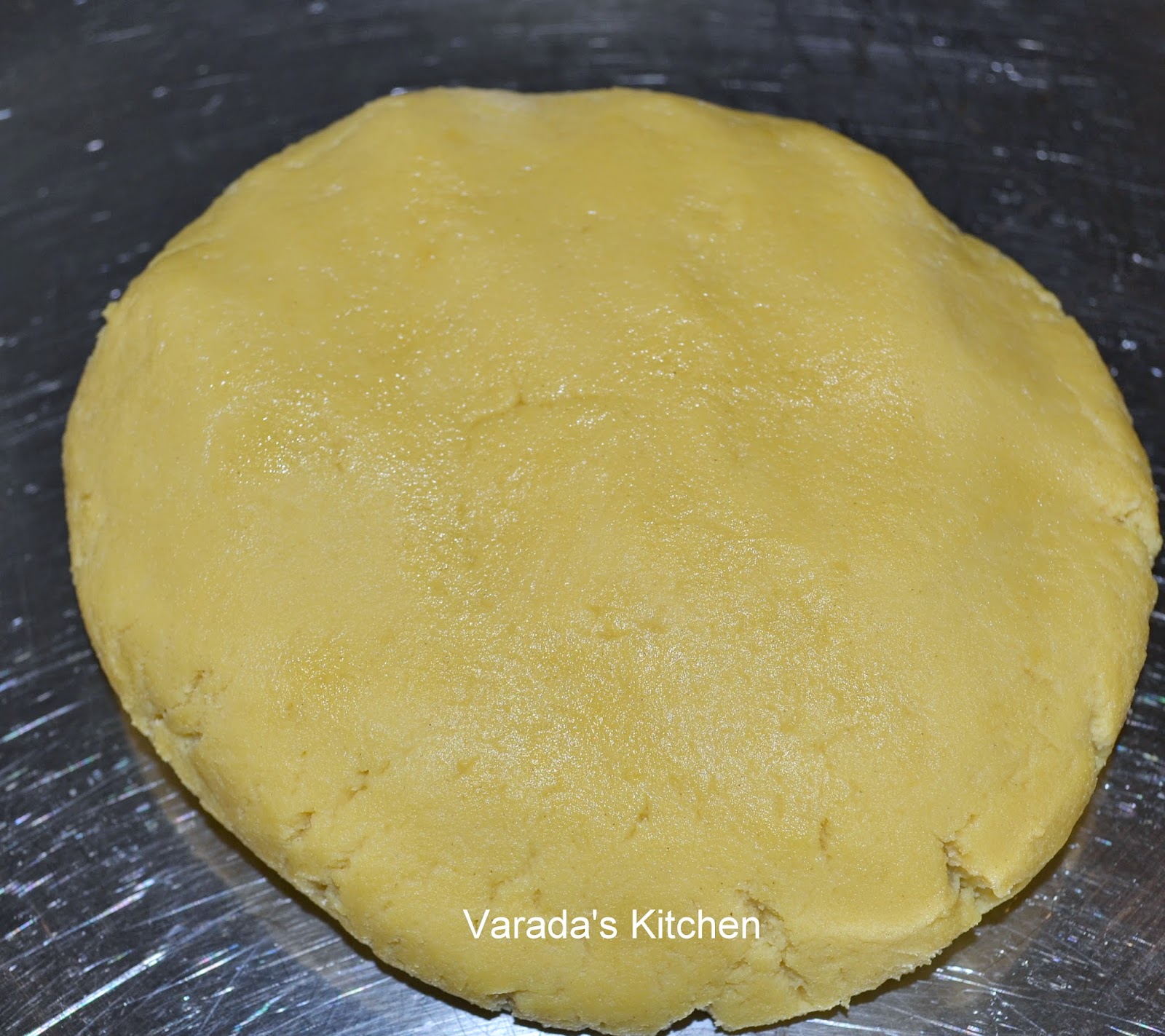
Add all the ingredients for the bati in a mixing bowl. Using water mix together to form a dough. Knead with a touch of olive oil on your finger tips until smooth and soft. Keep aside for 30 minutes.
Heat about 6 cups of water in a large pan. Divide the dough into lemon size portions.


Roll each portion into a flattened ball on the palm of your hand and drop it in the heated water.


Let the water come to a boil. As the temperature of the water rises the partially cooked bati will rise to the surface of the water.


Preheat the oven to 350 F. Let it simmer for a couple of minutes and then take them out of the water. Allow water to drain on a paper towel.


Place a parchment paper on a baking sheet. Transfer the drained bati on to the baking sheet.


Bake for 25 minutes. 15 minutes into baking turn them over and continue to bake.


Remove the fully baked and browned bati from the oven and allow to cool.

To the make the dal
Pressure cook the toor and masur dal. Heat oil in a pan and add the mustard and cumin seeds. When the mustard seeds crackle add the asafoetida and onion. Cook for a couple minutes and add tomato, ginger and all the remaining spices.


Mix well and let it cook until the tomato is soft and mushy. Add the dal and bring it to a boil. Season with salt. and let it cook for a few more minutes. Turn off the heat.


To put it together
In a small pan heat the oil for the dal topping. As soon as the oil is heated turn off heat. Add the cumin seeds and when they turn color add the paprika.


Serve hot dal in a bowl with a little of the topping along with the dal bati.

Flaounes (Cypriot Cheese Pies)

Flaounes or cheese pies are made in Cyprus to celebrate Spring. These traditional pies have a filling made with indigenous flaouna cheese. This cheese is not available outside of Cyprus but halloumi is a good substitute. The owner of the local Mediterranean store suggested sweet cheese as a close substitute. I used a combination of halloumi and the sweet cheese.


Mahleb is a spice found in Cyprus. It has a mild fragrant aroma. I was able to find it at the Mediterranean store as well and its aroma permeated through the entire kitchen as the pies baked. I can see myself using it as a flavoring agent in other sweet breads.


The last of the special ingredients called for in the recipe was edible gum called Mastic. While its texture when crushed was similar to any edible gum it too added a mild flavor to the pie. Normally pretty expensive I found it on a special sale. If not for the sale I would have left it out.

I enjoyed baking these pies and they were very flavorful but I do not believe I will bake them again. They are just too heavy and filling.

You will need
For the dough
1 1/2 tsp. sugar
1 egg
1/4 cup milk
4 tbsp. butter
2 1/2 cups bread flour
3/4 tsp. salt
3/4 tsp. Instant yeast
1/2 tsp. mastic
1/4 tsp. mahleb powder
1/4 cup warm water

For the filling
250 gm cheese (mixture of halloumi and sweet cheese)
1 egg
1 tsp. mint extract
120 gm raisins
1 tbsp. flour
1 tbsp. semolina
1 tsp. baking powder


1/4 cup sesame seeds
egg

Make the filling first. Grate the cheese. In a mixing bowl combine all the ingredients except the baking powder. Cover and refrigerate.


Make the dough. In a mixing bowl beat the eggs, sugar, butter and milk. Sift the flour, salt, mahleb, mastic and the yeast. Add the dry ingredients to the wet ingredients. Add the water a little at a time and knead into a dough. Knead for about 10 minutes by hand, oil, cover and keep aside. Allow it to rise to double its volume. Half and hour before putting the pies together take the filling out of the refrigerator and add the baking powder. In a small plate place the sesame seeds.

Preheat oven to 350 F. Divide the risen dough into 10-12 portions. Roll one portion on a floured board and roll it into a small disc. Place a couple tablespoons of filling in the center and fold it like shown in the pictures to form a square with filling showing in the middle.


Place it on a baking sheet covered with parchment paper and continue with the remaining portions of dough. Use the tines of a fork to seal the edges. Dip the top of the flaounes in the sesame seeds to cover the sides with sesame seeds. If you like sesame seeds you can cover the entire back of the flaounes with them. We are not fond of them so I only added a few on the top.


Bake for 20-25 minutes or until the cheese puffs up and browns. Transfer to a cooling rack and cool completely before storing. Can be stored at room temperature for a couple days in an air tight container.


Serve warm.
Flaounes do not taste very good when reheated.

Wednesday, April 23, 2014

Baked Soybean Kofta in Spic Tomato Gravy

The is the 17th week of the 52 Week Challenge and the theme this week is Soy. I made these soybean kofta in spicy tomato gravy for the challenge.


This recipe requires you to soak the soybean overnight. Pressure cook the beans so they are tender when mashed to pulp. Addition of just two or three raw unsalted cashews to the gravy makes it creamy.

You will need
For the kofta
1 cup dry soybean
1 medium onion, chopped
1 Serrano pepper, deseeded and minced
1 tbsp. paprika (adjust to taste)
1 tbsp. cumin coriander powder (you could use garam masala or your favorite spice mix)
1 tbsp. agave syrup or sugar (optional)
Juice of 1/2 lime
handful cilantro, diced
salt to taste
1/4 cup semolina (could use cornmeal)

For the gravy
1 large onion, coarsely chopped
4 medium tomatoes, coarsely chopped
2-3 raw unsalted cashews

1 tbsp. ginger garlic paste (or fresh ginger and garlic minced)
2 tbsp. olive oil (can substitute oil of your choice)
1 tbsp. paprika
1 tbsp cumin coriander powder (or garam masala)
1 bay leaf
1 tsp. cumin seeds
salt to taste
cilantro to garnish

To make the kofta
Wash and soak the soybean in water overnight. Pressure cook until tender. Drain the water and mash the beans in a bowl. Combine all the other ingredients except semolina with the mashed beans. Taste and adjust seasoning. 


Preheat oven to 400 F. Divide the mashed mixture into small balls.  Roll the balls in semoline and place on a baking sheet covered with parchment paper. 


Bake for 18-22 minutes until they are no longer mushy, hold their shape well and are slightly brown.


Meanwhile, heat a pan and add the chopped onion and tomatoes to it. Let them cook on medium high heat until the juice from the tomatoes is flowing. Switch off heat and cool the mixture.


Transfer to a blender. Add the cashew nuts and blend until smooth and keep aside. 
Heat olive oil in a pan and add cumin seeds. When heated through add the ginger garlic paste. Cook for under a minute and . Pour the gravy back into the pan. Add cumin coriander powder, salt, paprika and bay leaf. Let it simmer for 5 minutes. 


When the kofta are cooked transfer them to a oven safe deep dish. Pour half of the gravy over the top. Put the dish in the oven for 5 minutes. Pour the remaining gravy over the top.


Serve hot.

Achari Aloo (Spicy Potatoes)

Today I am posting a recipe from Punjab. Every day this month I will post a recipe from a different state in India.


When I think of Punjabi food I think of my first job out of grad school in Mumbai. I had a colleague who was originally from Punjab. It was her first job too. We caught up with each other during lunch everyday. Her mother was an amazing cook and she brought delicious lunch everyday. At that time I was new to Mumbai and for the first couple months did not have very good lunch options. My friend packed more than she needed and coaxed me to have a large helping.

Achari Aloo is made with baby potatoes. I got mine from Whole Foods. They are bite sized and cook up soft and creamy. This dish is spicy and the masala is made using partially ground seeds that are normally used in achar or pickle. Paneer and Cauliflower can also be made using the same spices.

You will need
1/2 lb baby potatoes.
1/4 tsp. fenugreek seeds
1/2 tsp. mustard seeds
1/2 tsp. fennel seeds
2 tbsp. olive oil
1 tsp. cumin seeds
1 tsp. nigella seeds
1 tsp. turmeric powder
1 tsp. ginger garlic paste
1 tsp. agave nectar or sugar
salt to taste

Wash and boil the baby potatoes.


Grind fenugreek, mustard and fennel seeds to a coarse powder and keep aside. When the boiled potatoes cool, peel and keep them aside.


Heat oil in a pan and add the cumin and nigella seeds.


When they change color add the turmeric powder followed by the peel boiled potatoes. Mix it all together.


Add the ginger garlic powder and a quarter cup of water.


When the water is boiling add the ground spices, agave nectar and salt to taste. Continue to cook until the water is almost gone.


Serve hot with poli.

Tuesday, April 22, 2014

Podanlangkai Chutney (Snake gourd Chutney)

Today I am posting a recipe from Pondicherry. Every day this month I will post a recipe from a different state in India.


Pondicherry is a little Union Territory on the eastern shore of India in Tamil Nadu. It was once a French colony and some people like to continue to keep the French influence in the former colony.

When I finished grad school I took a job in Bangalore and lived with my uncle and aunt. My aunt was very active in the local Marathi Mandal (club). I helped with their annual play and got to know her whole group. Every year her group went on a trip and that year they picked Pondicherry . I was asked if I would like to go along and I jumped at the chance.

Pondicherry is a pretty place and we were there for only a day and a half. One of the things I distinctly remember is going to the beach to watch the sun rise over the water. I had to keep reminding myself that the sun was rising and not setting. Having grown up in Goa on the western coast I had never seen the sun rise over the sea.

I had trouble finding recipes for Pondicherry. I found a Google book and really liked the mango chutney but decided not to replicate those recipes. Then I found a piece in the metro section of the newspaper Hindu. They were featuring a series of recipes from Pondicherry and that is where I found this recipe.

My first question was what is snakegourd and how will I find it? As luck would have it my next visit to the Indian store solved that problem. They had a fresh shipment of snake gourd and I realized after looking at it why it is called snake gourd. I picked up the smallest of the lot.


You will need
1 snake gourd
3 tbsp. olive oil
1 tsp. mustard seeds
1 tsp. urad dal
5-6 curry leaves
1 dried red chili pepper
1/2 tsp. tamarind paste
1 1/2 fl. oz. coconut milk
salt to taste

Wash and peel the snake gourd. Cut it in half and remove the seeds. Julienne the pulp. Keep aside.
Heat oil in a pan and add the mustard seeds, urad dal, curry leaves and the red chili pepper.


When the mustard seeds crackle add the snake gourd and salt. Cover and cook until tender but not mushy.


Add the coconut milk and tamarind paste and bring it to a boil.

Turn off heat.


Serve hot.

Monday, April 21, 2014

Besan Tarkari (Besan bhaji)

Today I am posting a recipe from Odisha. Every day this month I will post a recipe from a different state in India.


Odisha is a coastal state in south eastern India. Parts of coastal Odisha are home to large nesting grounds for the olive ridley sea turtle. Some of these are open to visitors. Wouldn't it be nice to visit this coast during nesting season and see hundreds of sea turtles? And even better to be there when the little turtles hatch and make their way to the water?


Back to the recipe: I found this recipe very interesting because cooked besan cubes are used in place of a vegetable. I have since found similar recipes in a lot of neighboring states. I usually do not leave a lot liquid in the gravy. If you like more liquid increase the amount of water.


You will need
1 cup besan
1 tsp. baking soda
1 medium potato
1 tsp. sugar
1 medium onion
2 tomatoes
1 tsp. ginger garlic paste
1 tsp. turmeric powder
1 tbsp. coriander cumin powder
1 tsp. paprika
2 pods cardamom
salt to taste
olive oil

In a mixing bowl whisk together the besan, baking soda and 1/2 a teaspoon of salt with a cup of water. Transfer to a pan and place the pan on low to medium heat. Whisk to prevent lumps as the mixture heats up.


Keep whisking on medium heat to thicken the mixture. Then turn off heat and let it cool to room temperature.


Transfer contents to a mixing bowl and knead well. The mixture will be sticky. Continue to knead and it will come together. Pour a teaspoon of olive oil on the palm of your hand and finish kneading.


Let it rest for 15 minutes. Then transfer to a flat surface and flatten.


Cut up the flattened besan dough into cubes.


Heat oil in a pan and cook the cubes until brown on both sides.


Wash, peel and cube the potatoes. Cook them in a little oil in the same pan.


Keep aside the besan cubes and potatoes. Add a tablespoon of oil to the pan. When hot add a teaspoon of sugar and caramelize it. Chop the onions and add them into the pan. Let them cook on medium low heat.


Meanwhile chop the tomatoes. When the onions are translucent and slightly brown add the ginger garlic paste and the tomatoes. Add the turmeric powder, coriander cumin powder and paprika. Shell the cardamom and pound the seeds to a powder. Add them to the tomato mixture.


Cook the tomatoes for a couple minutes. Add water and let the mixture come to a boil. Simmer until the gravy thickens and the tomatoes are mushy. Ensure there is plenty of liquid if not add a little warm water.


Add the potatoes and cook them for a few minutes. Add more water if needed. Then add the cooked besan cubes and cook for a few minutes.


If you like gravy then add more water. I prefer semi dry consistency so I let most of the water evaporate.


Serve hot with poli.

Sunday, April 20, 2014

Black Rice Pudding

Today I am posting a recipe from Nagaland. Every day this month I will post a recipe from a different state in India.


Nagaland is located in north eastern India. Nagaland is a tribal region and most Naga people belong to tribes. Its capital city is Kohima.

The cuisine of Nagaland is mainly non vegetarian. Fish, dry fish or fish sauce is used in almost every recipe that includes vegetables. It was a challenge finding a vegetarian recipe. Rongmei is one of the tribes in Nagaland and I found this Rongmei Naga style recipe here.

Black rice is a sticky glutenous rice available in north eastern India, China and Thailand. Black rice pudding preparation from Thailand is very similar to this recipe except they use coconut milk. Black rice appears purple when it is cooked and is very rich in antioxidants. It has a creamy texture when cooked and is very flavorful.


You will need
1 cup black rice
2 1/2 cups water
1/2 cup milk
3 tbsp. sugar

Wash the rice, drain the water and keep aside for half an hour. In a pressure cooker pan add 3 cups of water and the rice. Pressure cook with the pressure on for 10 minutes which is equivalent to 3 whistles. Add sugar and adjust according to taste. Warm the milk in a microwave and add it to the rice. Transfer the rice to a pan and simmer on medium heat until the liquid thickens.


Turn off heat and let it cool.


Enjoy!