Monday, April 14, 2014
Tricolor Pasta Salad with Tomatoes, Spinach and Mozzarella
You will need
1 cup tricolor penne pasta
a handful spinach leaves
1 small ball fresh mozzarella
a handful cherry tomatoes
1 tsp. lime juice
1 tbsp. olive oil
salt and pepper
Cook the pasta according to package instructions. Drain, wash in cold water and keep aside.
Cut the cherry tomatoes into quarters, chiffonade the spinach and dice the mozzarella. In a bowl add the drained pasta, tomatoes, spinach and mozzarella.
Squeeze lime juice, add olive oil and black pepper. Season with salt and serve.
Enjoy!
Parippu Payasam (Mung Dal Payasam)
I have very fond memories of this payasam. The neighborhood where I grew up was very diverse. There were families from all over India. There was one family from Kerala. Every Onam three bowls of delicacies would be hand delivered to our house. The one I waited for most was this payasam. It is Kerala tradition to make it for Onam.
Kerala is small state on the south western coast of India. It has a very literate population as compared to a lot of other states. Onam is a festival celebrated only in Kerala. It is celebrated to honor the life of Mahabali from the story behind the Vamana avatar of the Dashavatar.
I have not had this payasam for a very very long time though I got the recipe from a friend a while back. As it was cooking the kitchen was engulfed in this lovely aroma. What took me by surprise was how that aroma took me back to my childhood. I did not realize I had such a strong association with it. I am so glad I made this payasam. It just made me happy.
You will need
3.5 oz mung dal
5 oz jaggery
3/4 cup thick coconut milk
1 cup light coconut milk
3 tbsp. ghee, divided
a few cashews and raisins
If you are not using fresh coconut you can use a can of coconut milk. I used Goya light coconut milk. Dilute the milk by half to produce the light milk. Use at full strength for the thick milk. Dry roast the mung dal in a pan until it is crispy and turns darker in color.
Transfer to a pressure cooker and cook with 1 cup water. The dal should be cooked but should not be mushy. While the dal cooks add jaggery and a cup of water to a bowl. Let the jaggery dissolve completely in the water. In 1 tbsp. of oil fry the cashews and the raisins. Drain on a paper towel and keep aside.
Once the dal is cooked transfer it back to the pan and add to it 2 tbsp. ghee, the jaggery solution and the light milk. Bring it to a boil. Let it simmer stirring occasionally until the quantity is reduced by half.
Now add the thick milk and let it assimilate completely in the solution.
Let the mixture cook on low heat for another 5-8 minutes. Stir infrequently.
Turn off heat. Add the cashews and raisins and serve.
Sunday, April 13, 2014
Dudali (Arrowroot Halwa)
Karnataka is a coastal state to the south of Maharashtra. It is a big state with several regions. As with most states this size there are many sub cultures in the state. The coastal region especially to the north is very different from southern areas like Bangalore and Mysore.
The regions have different cuisines and art. In Shimoga district in the western ghat an art form Chittara is very popular. Chittara, meaning picture, was used to decorate the walls of the homes in the region were it originated. It has since been identified as an ancient art form that needs to be preserved. You will find Chittara paintings on canvas and pots sold commercially providing the artist much needed money to keep the art alive. The picture to the left is an example of this style.
I had this dish at a friends house and asked her for the recipe. Like a score of other recipes I never tried it until now.
1 cup arrowroot powder
1/4 cup sugar
1 cup milk
1 cup water
2 tbsp. thick coconut milk or coconut pulp
2 pods cardamom
a few cashews for garnish
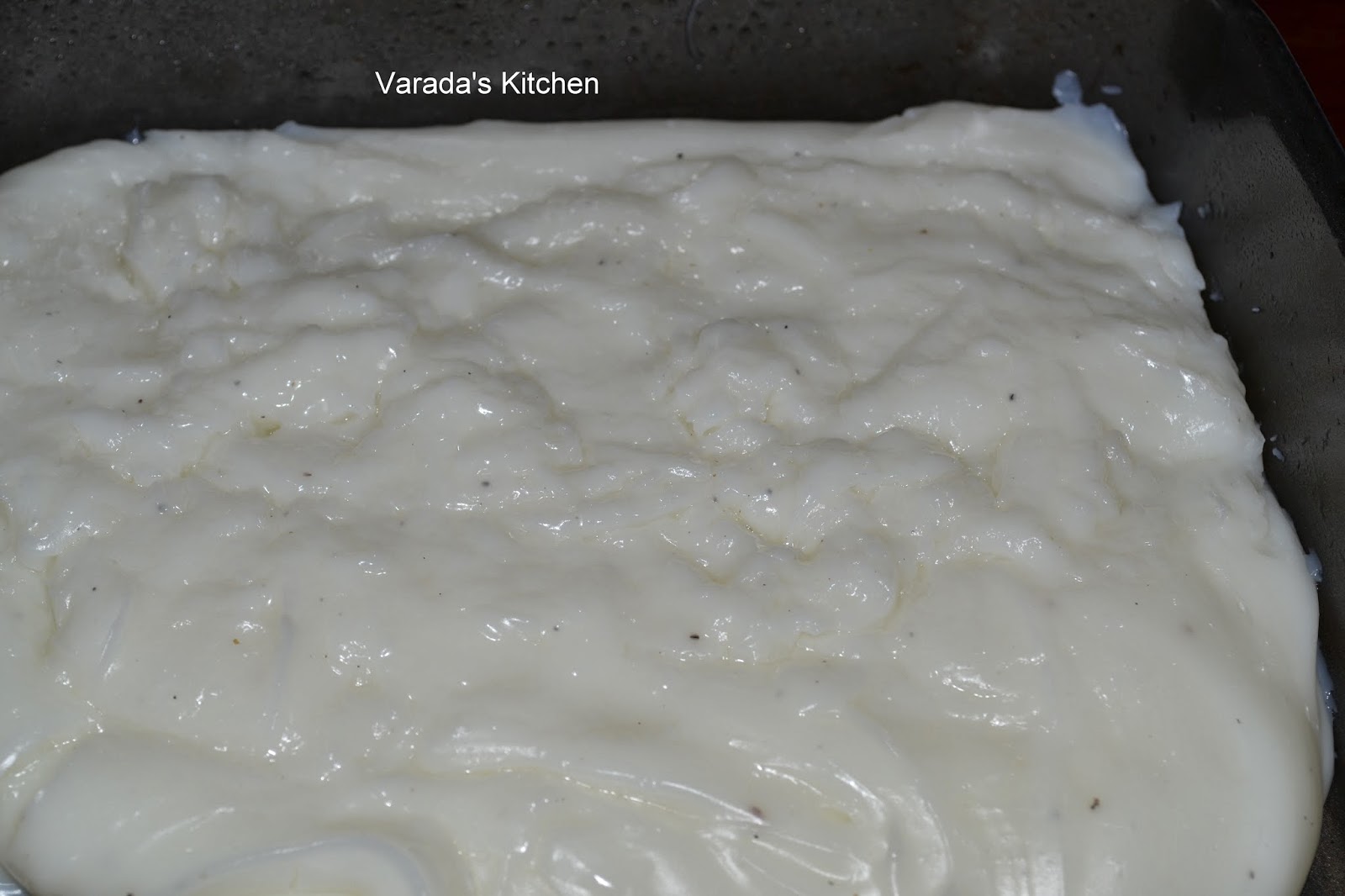
Shell the cardamom pods and pound the seeds into a powder. Keep aside. Grease a baking tray and keep aside.
Whisk together the arrowroot powder, sugar, milk and water in a pan and bring to a boil on medium heat.
Add the coconut milk or pulp. Continue to whisk continuously while the mixture thickens. Lower heat if needed.
As the mixture thickens it will start leaving the edges of the pan.
Transfer to the greased dish and smooth out the top with the moistened bottom of a cup. Let it cool for an hour.
Cut it into barfi sized squares and serve.
Saturday, April 12, 2014
Sathu Paratha
Bihar and Jharkhand were the same state in the India I lived in. Ranchi was a just a town in Bihar. It is now the capital of Jharkhand a state carved out of Bihar to give better representation to the tribal areas. This is a mineral rich belt and there is a constant struggle to determine operating licenses for mining. The process is made harder by the fact that land deeds are not as clear cut with the tribal population and it is easy for vested interests to swindle them out of their valid right.
A long time ago and for only a couple of years my parents lived in a very small town called Jhinkapani in this mineral rich belt. While my mother was happy to move out of the rural area; she had fond memories of the time spent there and the friends they had.
This was one of the early states I cooked for. I had started blogging in earnest only a couple months earlier. Blogging helped to get my mind off my 11 year old cat's fight with cancer. The only thing I focused on was to make it easy for anyone (including myself) to come to my blog and follow the steps exactly to reproduce the recipe. As such I ensured I had step by step pictures. However, I would love to change the main pictures on most of these early dishes. I left them as is as a reminder of where I started.
Sattu is a commonly used ingredient in Jharkhand, Bihar and Madhya Pradesh. It is a common breakfast food. It is used in sweet as well as savory preparations. It is very nutritious as it is derived mainly from yellow gram and other pulses. Yellow gram is known by different names in different states. Dala is the Marathi name. I remember snacking on it as a child. I chose this recipe after a Bihari friend assured me it was okay to make it for Jharkhand.
You will need
For the dough
2 cups whole wheat flour
1 tsp. ajwain (carom seeds)
1 tsp. salt
For the stuffing
1 cup Sattu
2 tbsp. onion, chopped
1/4 cup cilantro, chopped
1 Serrano pepper, deseeded and minced
1/2 tsp. ajwain
1 tsp. salt
1 tbsp. olive oil
In a mixing bowl mix all the ingredients for the dough and using water knead into a soft ball. Keep aside.
In a separate bowl mix together all the ingredients for the stuffing. Sprinkle a little water and mix well to form a crumbly mixture. It should not come together at all.
Divide the dough into lemon sized balls. Flatten one of them on the palm of your hand.
Fill in some of the stuffing.
Pulling on the edges to enclose the stuffing and close the top.
Using a little wheat flour if needed roll out the paratha.
Heat a griddle pan. Put a few drops of oil on the pan and place the paratha on it. Add a a few drops of oil on the top of the paratha. When the bottom is cooked turn over and cook the second side.
Take off heat. Repeat for the rest of the dough.
Serve hot.
Friday, April 11, 2014
Ambal (Yellow Pumpkin Chutney)
Ambal is a dish made mainly by the dogra people from Jammu and Himachal Pradesh. It is made with yellow pumpkin and has a sweet and sour taste. This recipe has been adapted from here.
You will need
1 cup cubed yellow pumpkin
1 tbsp. olive oil
1/4 tsp. fenugreek seeds
1/4 tsp. turmeric powder
1 dried red chili pepper
a few drops of tamarind paste
1/2 tsp. jaggery
salt to taste
Heat oil in a pan and add the fenugreek seeds. When they start turning color add the red pepper and turmeric powder. Add the cubed pumpkin. Cover and cook on low heat until the pumpkin is soft. Ensure it does not burn.
Add tamarind paste dissolved in a 3 tbsp. water to the pan. Add the jaggery and salt to taste. Bring it to a boil. Turn off the heat.
Enjoy!
Thursday, April 10, 2014
Khatta (Boondi with Besan Amchur Masala)
Himachal Pradesh as the name suggests is nestled in the Himalayas. Pahadi is another name for everything that comes from Himachal Pradesh. Pahadi literally means 'of the mountain'. Chamba, Shimla, Kullu and Kinnaur are some of the well known districts of this state.
Though I have never been to Himachal Pradesh, it always reminds me of one of my good friends from school. She moved after high school and we lost touch over the years. Social media has reconnected us only a couple months ago. Hopefully we can get together someday.
While in middle school we had danced to a pahadi song during the Republic Day annual inter school competition that was held after all schools marched smartly through town. Here is a picture. I post it only to showcase the beautiful clothes but in case you wondered we took first place.
To the recipe of the day: Khatta translates to sour. This dish has a mildly sour taste that is very appealing. My daughter and I loved it, my husband not so much. The sourness is from amchur (mango peel) powder and goes very well with all the other flavors.
The recipe is very simple. You take a bunch of different flavors in powder form with besan as a base. You cook it all together in water to form a sauce and then add the boondis. As the sauce was cooking I did a taste test and could tell something was missing. After I added the boondis (fried besan drops) it was as if the missing piece of the flavor puzzle was complete. Amazing!
The flavor of this dish keeps developing for hours. It tasted so much better the next day. The first day I would say Khatta was more a condiment than a side especially with poli. The next day it could have been the primary side dish.
If as a child you liked to peel tamarind pods and nibble on the raw pulp or if you liked raw mango then you will love this dish.
You will need
3 tbsp. amchur powder
4 tbsp. besan
2 tbsp. coriander powder
1/4 tsp. paprika
1 tbsp. turmeric powder
a few leaves cilantro
salt to taste
3 tbsp. olive oil
1 tsp. fenugreek seeds
1/4 tsp. asafetida
2/3 cup boondis (I got these from the Indian store)
If you do not have coriander powder, roast coriander seeds in a pan and grind them to powder when cool. Collect all the spices in the right measurement with the besan.
Heat oil in a pan and add the fenugreek seeds. When they start turning a darker color add the asafetida, all the other spices and besan. Roast them for a minute.
Add 5 cups of water and bring the mixture to a boil stirring occasionally. Let it boil for at least 20 minutes and thickens a lot.
Add boondi to the mixture and let it continue to boil for another 5 minutes. Turn off heat and let it cool. The mixture will continue to thicken as it cools. The boondis absorb a lot of liquid.
Serve with rice or poli.
Wednesday, April 9, 2014
Choliya (Green Chana bhaji / Hare Chane ki Sabji)
Haryana is located in the north west and is surrounded by Punjab, Rajastan, Delhi and Uttarachal. This was one state were I picked the dish without considering which state it was from. This was one of the first dishes I made for this month long challenge.
Choliya or green chana is found during winter when the chickpea crop is harvested. I found some at the local Indian store. When I started looking for a new way to cook these I found recipes from a lot of states. Dried chickpeas are very popular all over India. And every state that has a recipe for dried chickpeas has one for the fresh green version. However, most of these have onion and a lot of spices. I was looking for something simple.
Then I remembered this simple recipe that I had at a friends house. I loved it because it has very little spice and that allows the taste of the channa to dominate the dish. Since she is from Haryana, choliya it was for Haryana.
The green channa I bought was being sold with the shell and I knew it would take me forever to shell it so I bought only a handful. I remember as a child when my father used to get fresh matar (peas) on Sunday and we all chipped in to shell them. If my father was visiting I would have bought more than a handful of the channa and spent a good deal of time with him chatting and shelling them.
As it happened I was picking up my daughter from school that day and I shelled the choliya while waiting for her in the pick up line.
By the time she came out I had them all shelled and ready to be cooked.
You will need
1 cup green chana, shelled
1/4 onion, chopped
1/4 cup cilantro, chopped
1 tsp. cumin seeds
1 tsp. turmeric powder
1 tsp. cumin coriander powder
1 Serrano pepper, deseeded and minced
1 tbsp. olive oil
salt to taste
a squirt lime juice
Shell the fresh chana.
Pressure cook the chana so that they are soft.
In a pan heat oil and add the cumin seeds. When they change color add the turmeric powder, Serrano pepper and onion. When onion is cooked add the chana and the cumin coriander powder. Season with salt. Let it cook together with the spices for a few minutes. Turn off the heat. Squirt some lime juice and mix well.
Garnish with cilantro and server hot.
Enjoy!
Tuesday, April 8, 2014
Dal Dhokli
I visited Gujarat with my father when I was a teen. The visit was limited to a town called Jafrabad which is in in Saurashtra. We flew into Bhavnagar and drove to Jafrabad. My father had work there. I went along for the ride. On the way back we stopped at Palithana, where some beautiful Jain temples are located. We woke up at 5:30 in the morning and climbed thousands of steps to get to the top of the nearby mountains to see the temples. Every thing at the top was beautiful, the view, the crisp mountain air and most of all the temples. On the way down we bought yogurt from a local lady. She was selling it in mud pots. Once back in town we feasted on the prasad of farsan in one of the Dharmashalas (hostels) and then drove on to Bhavnagar.
Back to the recipe: Dal Dhokli is a very flavorful toor dal preparation from Gujarat. The Dhokli is made out of whole wheat flour and cooked directly in the dal. It is like poli and dal were cooked together. I used onion in this recipe as my husband likes onion and tomato masala.
You will need
For the dhokli
1 cup whole wheat flour
1 tbsp. besan
1 tsp. carom seeds
1 tsp. salt
2 tbsp. olive oil divided
For the dal
1 1/2 cup toor dal
3 tbsp. olive oil
1 tsp. cumin seeds
1/4 tsp. asafoetida
5-6 curry leaves
1 tsp. turmeric powder
1 tsp. ginger garlic paste
1/2 onion
1 Serrano pepper, deseeded and minced
1 tomato
1 tsp. coriander cumin powder
1/2 tsp. paprika (adjust according to taste)
1 tsp. jaggery (or sugar)
1 tsp. tamarind paste
salt to taste
a handful cilantro
To make the dhokli
Reserve 1 tbsp. of olive oil and mix the other ingredients in a mixing bowl. Using water prepare dough. Using the reserved olive oil on the palm of your hand knead the dough well and keep aside for at least 15 minutes.
To make the dal
Pressure cook toor dal. In my pressure cooker once the pressure rises I leave it for 10 minutes and then turn off the heat. That is equivalent to 3 whistles. Let the pressure subside before opening the presuure cooker. Chop the onion. Heat oil in a pan and add the cumin seeds. When they crackle add the asafoetida, turmeric, curry leaves and ginger garlic paste. Saute the paste for a few seconds and add the onion and Serrano pepper. Saute until the onion is cooked.
Chop the tomato and add it to the pan.
When the tomato is cooked add the dal, jaggery, tamarind paste, paprika and coriander cumin powder. Add 6-8 cups of water. Cover and bring to a boil. At this time the dal should look and taste watery.
To put it together
Divide the dough into 4 equal portions.
Take one portion and roll it out to a disc about 1/4 in thick.
Using a pastry cutter cut it into small rectangular dhokli.
Add these rectangles to the boiling dal. Add them one at a time all over the place so that they don't form a lump. Repeat with the remaining portions of dough.
Cover the dal and let the dhokli cook completely for about 15-20 minutes. The dal will thicken as the dhokli cook and absorb the water. Garnish with chopped cilantro. Squeeze a little lime juice over the dal and serve hot.