This recipe was very popular about a decade ago. I had not made it for a very long time. I remember the last time I made it. It was my daughter's birthday and she had invited a few friends over. They were the age were they still ran around and played in the yard but were independent enough to do things on their own. I remember I made a big batch of this punch and put it on the table. I turned my back for about 20 minutes. I came back to find the girls on a sugar high, the punch almost all gone. They were standing around the table talking excitedly, drinking and refilling their glasses. I remember shooing them out of the house and away from the punch bowl. Yes, it is that good!
I made it again last week and it tasted just as good. There is no recipe. You can eye ball the proportions.
You will need (for 8 servings)
2 liter bottle Sprite
1 tub Lime Sorbet
Just before serving, place half the tub of sorbet in a punch bowl. Add the sprite and let the sorbet melt. Taste. Add more sorbet if needed.
Enjoy!
Saturday, June 11, 2016
Friday, June 10, 2016
Summer Fruit Salad
With Memorial day came the unofficial start of summer and on cue the temperature soared. Then we had rain, a lot of rain, but as soon as it stopped raining the temperature rose again. Typical summer weather - where humidity plays with your hair and the heat makes the afternoon nearly unbearable. One way to beat the heat is to snack on cold summer fruit. This salad helps you do just that.
There is really no recipe. Put together a medley of summer fruit. Dice the bigger ones to bite size pieces and squeeze a little lime juice. I like to add apples to bring it all together. Cool in the refrigerator for a couple of hours. That is it!
You will need (4 servings)
3-4 Strawberries
a handful of blueberries
a handful grapes
1 apple (I used Fiji)
1 tbsp. lime juice
Put the berries and grapes in a colander, rinse and allow the water to drain.
Core the apple and cut into bit size pieces. Mix in the lime juice and keep aside. The lime juice will keep the apple from turning brown and add a nice tang to the salad. If the strawberries you are using are large, cut them into 3-4 pieces. Cut the large grapes into two, if they are small you can use them whole. Combine all the ingredients and let them chill for a couple of hours.
Enjoy!
There is really no recipe. Put together a medley of summer fruit. Dice the bigger ones to bite size pieces and squeeze a little lime juice. I like to add apples to bring it all together. Cool in the refrigerator for a couple of hours. That is it!
You will need (4 servings)
3-4 Strawberries
a handful of blueberries
a handful grapes
1 apple (I used Fiji)
1 tbsp. lime juice
Put the berries and grapes in a colander, rinse and allow the water to drain.
Core the apple and cut into bit size pieces. Mix in the lime juice and keep aside. The lime juice will keep the apple from turning brown and add a nice tang to the salad. If the strawberries you are using are large, cut them into 3-4 pieces. Cut the large grapes into two, if they are small you can use them whole. Combine all the ingredients and let them chill for a couple of hours.
Enjoy!
Sunday, June 5, 2016
Farali Vada
Fasting foods is a whole different category of foods. They are mostly starchy foods designed to keep you from starving while you focused on all things spiritual. Those who fast follow strict rules of what foods are permitted and what foods are not. Give a foodie a list of ingredients and she will come up with recipes. The fasting food choices have exploded over the centuries and there are cookbooks devoted entirely to fasting food recipes. The days of a simple quick preparation paired with some fruit are long gone. This recipe is one such preparation.
Pardon the quality of the pictures. I made these for a summer weekend snack and had to click pictures while everyone waited patiently. I had to tweak this recipe a couple times before I got the taste just right. You could make this recipe when fasting or like me (someone who does not fast) make it anytime. It makes a lovely afternoon snack.
You will need (10 vada)
3 large potatoes
1 tsp. roasted cumin coriander powder
a bunch cilantro, should be 1/4 cup when diced
1 Serrano pepper or other green chili pepper, minced
2 tbsp. roasted ground peanuts
1/4 cup shredded coconut
15-20 raisins
1 tsp. lemon juice
1 tsp sugar
salt to taste
a couple of tbsp. oil
Boil in the potatoes in a pressure cooker or on the stove top. To cook them in the pressure cooker place the potatoes in half an inch of water and place then in the cooker. When the pressure rises place the whistle and let it cook for 5 minutes. Turn off heat and allow the pressure to reduce. The potatoes are ready.
Mash the potatoes and combine with salt and the cumin coriander powder. Divide into 10 portions and leave aside until needed. In a separate bowl combine all the other ingredients. Season with salt, adjust to taste. Divide into 10 portions.
Flatten a portion of potato in the palm of your hand. Place one portion of the filling in it.
Bring up the outer edges of the potato together and form a ball around the filling.
Repeat for the remaining portions.
Heat an appe pan or an aebleskiver pan. Drop a a few drops of oil in each well. Place one prepared vada in each of the wells. Let it cook on medium heat. When the bottom is brown turn it over in the well using a skewer or a knitting needle. Continue to cook and turn until all sides are cooked through. If needed add a couple more drops of oil when you turn it over. Take it off the heat.
Enjoy as an evening snack or if you are fasting as a main meal!
Pardon the quality of the pictures. I made these for a summer weekend snack and had to click pictures while everyone waited patiently. I had to tweak this recipe a couple times before I got the taste just right. You could make this recipe when fasting or like me (someone who does not fast) make it anytime. It makes a lovely afternoon snack.
You will need (10 vada)
3 large potatoes
1 tsp. roasted cumin coriander powder
a bunch cilantro, should be 1/4 cup when diced
1 Serrano pepper or other green chili pepper, minced
2 tbsp. roasted ground peanuts
1/4 cup shredded coconut
15-20 raisins
1 tsp. lemon juice
1 tsp sugar
salt to taste
a couple of tbsp. oil
Boil in the potatoes in a pressure cooker or on the stove top. To cook them in the pressure cooker place the potatoes in half an inch of water and place then in the cooker. When the pressure rises place the whistle and let it cook for 5 minutes. Turn off heat and allow the pressure to reduce. The potatoes are ready.
Mash the potatoes and combine with salt and the cumin coriander powder. Divide into 10 portions and leave aside until needed. In a separate bowl combine all the other ingredients. Season with salt, adjust to taste. Divide into 10 portions.
Flatten a portion of potato in the palm of your hand. Place one portion of the filling in it.
Bring up the outer edges of the potato together and form a ball around the filling.
Repeat for the remaining portions.
Heat an appe pan or an aebleskiver pan. Drop a a few drops of oil in each well. Place one prepared vada in each of the wells. Let it cook on medium heat. When the bottom is brown turn it over in the well using a skewer or a knitting needle. Continue to cook and turn until all sides are cooked through. If needed add a couple more drops of oil when you turn it over. Take it off the heat.
Enjoy as an evening snack or if you are fasting as a main meal!
Saturday, June 4, 2016
Masala Crackers
Rain is welcome as the temperatures soar. However, we have been getting way too much rain over the last few weeks. Rainy lazy summer evenings call for crunchy snacks with a warm beverage. These crackers fit the bill perfectly.
I already have sourdough crackers on this space. This recipe uses the same base recipe but different flavoring ingredients. I used onion and carom seeds in these crackers. These seeds make the crackers a perfect companion for a cup of tea.
You will need (70 crackers)
1/2 cup whole white wheat flour
1/2 cup unfed sourdough starter
1/4 tsp. salt
2 tbsp. butter
1 tsp. onion seeds (kalonji)
1 tsp. carrom seeds (ova or ajwain)
1/2 tsp. olive oil
The recipe is the same as that for the sourdough crackers. Mix all the ingredients except the oil. Cover and place in the refrigerator for an hour.
Preheat the oven to 400 F. Place a parchment paper on your rolling surface. Take the dough out of the refrigerator and roll it out on the parchment paper to the desired thickness.
Cut it into squares using a knife or a pizza cutter. Brush lightly with oil. Then prick each square with the tines of a fork.
Bake for up to 20 minutes or until the edges begin to brown. Transfer to a cooling rack.
Allow them to cool completely before storing them in an airtight container.
Enjoy!
I already have sourdough crackers on this space. This recipe uses the same base recipe but different flavoring ingredients. I used onion and carom seeds in these crackers. These seeds make the crackers a perfect companion for a cup of tea.
You will need (70 crackers)
1/2 cup whole white wheat flour
1/2 cup unfed sourdough starter
1/4 tsp. salt
2 tbsp. butter
1 tsp. onion seeds (kalonji)
1 tsp. carrom seeds (ova or ajwain)
1/2 tsp. olive oil
The recipe is the same as that for the sourdough crackers. Mix all the ingredients except the oil. Cover and place in the refrigerator for an hour.
Preheat the oven to 400 F. Place a parchment paper on your rolling surface. Take the dough out of the refrigerator and roll it out on the parchment paper to the desired thickness.
Cut it into squares using a knife or a pizza cutter. Brush lightly with oil. Then prick each square with the tines of a fork.
Bake for up to 20 minutes or until the edges begin to brown. Transfer to a cooling rack.
Allow them to cool completely before storing them in an airtight container.
Enjoy!
Friday, June 3, 2016
Paneer Tomato Masala
Paneer is one of my daughter's favorites. To celebrate her return home for the summer I made paneer in masala/gravy, a simple recipe thrown together with whatever is available on the given day. That said, there is really no recipe. The basic idea is to marinate the paneer in the masala/gravy. The ingredients for the gravy I tweak based on the ingredients in the house. If I have cashews, I add some cashew paste. Today I had yogurt I needed to use up and so I mixed that in. The ingredients I use are close to those used in the classic versions but the method is nowhere close. Besides those recipes are usually spicy and unnecessarily rich. This probably works for special occasions but they are too heavy for everyday consumption in my house.
I served the paneer with some poli/chapati. My daughter enjoyed this meal thoroughly. While I was cooking I realized I have all kinds of paneer dishes on this space but for some reason I never posted paneer in gravy. So today I am posting the version I made when my daughter came home for summer.
You will Need (for 6 servings)
7 oz. paneer
1 tbsp. olive oil, divided
1 medium onion, diced finely
1 clove garlic, minced
1 tsp. garam masala
1 tsp. paprika (adjust to taste)
1 tsp. turmeric
3 large tomatoes, diced
3/4 cup yogurt, whisked
Cut the paneer into slabs and keep aside. Heat half the oil in a pan. Place the slabs of paneer in a single layer until partially cooked. Do not brown. Flip them over and cook the other side. Take them out of the pan and drain on a paper towel.
Add the remaining oil to the same pan and cook the onions on medium low heat. While the onions cook, cut the paneer into bite size pieces and keep aside. When the onions turn translucent add the garlic, garam masala, paprika and turmeric. Saute for a few seconds. The aroma will rise from the pan. Add the tomatoes and let the masala cook. When the tomatoes are mushy add the whisked yogurt and salt to taste. Simmer but do not let it come to a boil. Add the paneer and let it cook together for a few minutes. Turn off the heat.
Enjoy!
You will Need (for 6 servings)
7 oz. paneer
1 tbsp. olive oil, divided
1 medium onion, diced finely
1 clove garlic, minced
1 tsp. garam masala
1 tsp. paprika (adjust to taste)
1 tsp. turmeric
3 large tomatoes, diced
3/4 cup yogurt, whisked
Cut the paneer into slabs and keep aside. Heat half the oil in a pan. Place the slabs of paneer in a single layer until partially cooked. Do not brown. Flip them over and cook the other side. Take them out of the pan and drain on a paper towel.
Add the remaining oil to the same pan and cook the onions on medium low heat. While the onions cook, cut the paneer into bite size pieces and keep aside. When the onions turn translucent add the garlic, garam masala, paprika and turmeric. Saute for a few seconds. The aroma will rise from the pan. Add the tomatoes and let the masala cook. When the tomatoes are mushy add the whisked yogurt and salt to taste. Simmer but do not let it come to a boil. Add the paneer and let it cook together for a few minutes. Turn off the heat.
Enjoy!
This is my entry for week one, day one of BM #65 for the theme Summer dishes. Check out the Blogging Marathon page for the other Blogging Marathoners doing BM#65.
Thursday, May 26, 2016
Mugachi Usal / Sprouted Mung Usal
Sprouted beans are considered healthier than regular beans as they are more bio available. Sprouts can be eaten raw in salads but this Maharashtrian recipe is very popular in my house. It is a simple preparation and cooks up quickly.
We had this usal for dinner with poli but it tastes really good with yogurt and rice too. This is one of my childhood favorites and because it is a recipe with very few ingredients the proportions of the sweet, sour and savory need to be just right. Make sure you adjust them as per your taste.
You will need (4 servings)
2 cup dry mung beans
1 tbsp. olive oil
1 tsp. mustard seeds
1/4 tsp. asafoetda
1 tsp. turmeric powder
1 tsp. garam masala or coriander/cumin powder
1/4 tsp. ground black pepper
1 tsp. sugar
1 tsp. amchur powder or lemon juice
1 tsp. red chilli powder or to taste
salt to taste
Soak the mung overnight. In the morning wrap the mung in a wet cloth and leave it aside for a day. In summer you could drain the water and leave the mung in the same pan they were soaked in. You will not need to wrap in a cloth.
Heat the oil in a pan and add the mustard seeds. When they crackle add the asafoetida and turmeric powder. Next add the sprouted mung. Add a few tablespoons of water if needed. Cover and let it cook on medium low heat for 3-4 minutes. Add the remaining ingredients and mix well together.
Cover and allow to steam/cook a couple more times. Turn off the heat.
Enjoy!
We had this usal for dinner with poli but it tastes really good with yogurt and rice too. This is one of my childhood favorites and because it is a recipe with very few ingredients the proportions of the sweet, sour and savory need to be just right. Make sure you adjust them as per your taste.
You will need (4 servings)
2 cup dry mung beans
1 tbsp. olive oil
1 tsp. mustard seeds
1/4 tsp. asafoetda
1 tsp. turmeric powder
1 tsp. garam masala or coriander/cumin powder
1/4 tsp. ground black pepper
1 tsp. sugar
1 tsp. amchur powder or lemon juice
1 tsp. red chilli powder or to taste
salt to taste
Soak the mung overnight. In the morning wrap the mung in a wet cloth and leave it aside for a day. In summer you could drain the water and leave the mung in the same pan they were soaked in. You will not need to wrap in a cloth.
Heat the oil in a pan and add the mustard seeds. When they crackle add the asafoetida and turmeric powder. Next add the sprouted mung. Add a few tablespoons of water if needed. Cover and let it cook on medium low heat for 3-4 minutes. Add the remaining ingredients and mix well together.
Cover and allow to steam/cook a couple more times. Turn off the heat.
Enjoy!
This is my entry for week four, day three of BM #64 for the theme Mega BM List. Check out the Blogging Marathon page for the other Blogging Marathoners doing BM#64.
Wednesday, May 25, 2016
Masale Bhaat
Masale bhaat is a special preparation with spices and vegetables. It reminds me of weddings as it is usually served as the first course in weddings. I made this rice when my daughter was visiting and she made several trips to the kitchen to find out what was cooking. It takes a while to get this done but the end result is so worth it.
Several years back we stopped buying white rice. Today, I cook with every type of rice but white. I considered making an exception for this post but then decided against it. Once you make the switch, white rice tastes like junk food. I stuck with the brown rice and I am glad I did.
You will need
1 cup rice (preferably basmati)
2 small potatoes, diced in cubes
1/2 cup green peas
1/2 cauliflower florets
1 Serrano pepper, deseeded and diced fine
10-15 peanuts
1 tsp. garam masala
1/2 tsp. cayenne pepper powder
All of the spice blend given below
salt to taste
For the spice blend
2 tsp. coriander seeds
1 tsp. cumin seeds
3 cloves
1/2 inch cinnamon
For the tempering
3 tbsp. oil
1 tsp. mustard seeds
1 tsp. cumin seeds
1/2 tsp. turmeric powder
a pinch asafeotida
1 bay leaf, cut into inch pieces
4-5 curry leaves
Wash the rice and drain the water. Keep aside. In a small pan, roast the spices for the spice blend. Grind to a powder and keep aside until needed.
Heat oil in a large heavy bottom pan. Add the mustard seeds. When they crackle add the remaining ingredients in the list for tempering.
Next add vegetables, the potatoes, peas and cauliflower, with 2 1/2 cups of water.
When the water comes to a boil add the peanuts, chilli pepper, salt and all the spices.
Next add the drained rice
Cover and allow it to cook for 10-15 minutes on medium heat until all the water is gone and the rice is cooked through.
Turn off the heat. Rice tastes best when hot. Serve with vegetables sides or with papad and pickle.
Enjoy!
Several years back we stopped buying white rice. Today, I cook with every type of rice but white. I considered making an exception for this post but then decided against it. Once you make the switch, white rice tastes like junk food. I stuck with the brown rice and I am glad I did.
You will need
1 cup rice (preferably basmati)
2 small potatoes, diced in cubes
1/2 cup green peas
1/2 cauliflower florets
1 Serrano pepper, deseeded and diced fine
10-15 peanuts
1 tsp. garam masala
1/2 tsp. cayenne pepper powder
All of the spice blend given below
salt to taste
For the spice blend
2 tsp. coriander seeds
1 tsp. cumin seeds
3 cloves
1/2 inch cinnamon
For the tempering
3 tbsp. oil
1 tsp. mustard seeds
1 tsp. cumin seeds
1/2 tsp. turmeric powder
a pinch asafeotida
1 bay leaf, cut into inch pieces
4-5 curry leaves
Wash the rice and drain the water. Keep aside. In a small pan, roast the spices for the spice blend. Grind to a powder and keep aside until needed.
Heat oil in a large heavy bottom pan. Add the mustard seeds. When they crackle add the remaining ingredients in the list for tempering.
Next add vegetables, the potatoes, peas and cauliflower, with 2 1/2 cups of water.
When the water comes to a boil add the peanuts, chilli pepper, salt and all the spices.
Next add the drained rice
Cover and allow it to cook for 10-15 minutes on medium heat until all the water is gone and the rice is cooked through.
Turn off the heat. Rice tastes best when hot. Serve with vegetables sides or with papad and pickle.
Enjoy!
Tuesday, May 24, 2016
Pachadi
Pachadi is a salad made from fresh fruits and vegetables. On the Maharashtrian thali it is placed just south of the wedge of lemon. It is usually an alternative to koshimbir (another type of salad) but for very special occasions can be made in addition to koshimbir. If you are interested in Koshimbir you will find the post here.
Pachadi can be made with a lot of different vegetables. Most vegetables that can be consumed raw are candidates. Today I made a sampler with 7 different vegetables and one fruit. I used, carrots, cucumber, tomato, turnip, radish, cauliflower and the fruit guava. You have to ensure the produce is fresh and of good quality as it is eaten raw.
Pachadi is flavored with with a variety of mix-ins. Some that I used are shredded coconut, ground roasted peanuts. finely diced cilantro, de-seeded Serrano pepper crushed in salt, soaked and ground chana dal (bengal gram) and soaked and roasted urad dal (black gram). In addition salt, sugar, lemon juice or amchur powder and red chilli pepper powder is used. Lastly, the pachadi is tempered with oil, cumin seeds, asafoetida and turmeric powder.
I made all the recipes on this sampler on the same day and we ate it with some poli. However, in a typical thali you would make just one of these recipes, one that goes well with the rest of your chosen menu.
You will need (for 4 servings)
For Vegetable Pachadi
Main ingredients
1 carrot, peeled and shredded
or 2 medium tomatoes, remove seeds and dice
or 3 large florets of cauliflower, shredded
or 1 cucumber, peeled and shredded
or 1 3 inch piece white radish, shredded
or 1 small turnip, peeled and shredded
Mix-in ingredients
1 tbsp. shredded fresh coconut (you can use frozen)
2 tbsp. ground roasted peanuts
1 sprig cilantro, finely diced
1/4 serrano pepper, remove seeds and dice
2 tbsp. channa dal (bengal gram) (if using radish)
1 tbsp. ural dal (black gram) (if using cucumber)
Flavoring ingredients
1/2 tsp. sugar
1/2 tsp. red chilli powder
1 tsp. lemon juice or 1/2 tsp. amchur powder
salt to taste
For the tempering
1 tbsp. oil (I use olive oil)
1 tsp. cumin seeds
1/4 tsp. asafoetida
1/4 tsp. turmeric powder
For fruit pachadi
2 small or 1 large guava, shred on a fine shredder and discard the seeds
Pachadi can be made with a lot of different vegetables. Most vegetables that can be consumed raw are candidates. Today I made a sampler with 7 different vegetables and one fruit. I used, carrots, cucumber, tomato, turnip, radish, cauliflower and the fruit guava. You have to ensure the produce is fresh and of good quality as it is eaten raw.
Pachadi is flavored with with a variety of mix-ins. Some that I used are shredded coconut, ground roasted peanuts. finely diced cilantro, de-seeded Serrano pepper crushed in salt, soaked and ground chana dal (bengal gram) and soaked and roasted urad dal (black gram). In addition salt, sugar, lemon juice or amchur powder and red chilli pepper powder is used. Lastly, the pachadi is tempered with oil, cumin seeds, asafoetida and turmeric powder.
I made all the recipes on this sampler on the same day and we ate it with some poli. However, in a typical thali you would make just one of these recipes, one that goes well with the rest of your chosen menu.
You will need (for 4 servings)
For Vegetable Pachadi
Main ingredients
1 carrot, peeled and shredded
or 2 medium tomatoes, remove seeds and dice
or 3 large florets of cauliflower, shredded
or 1 cucumber, peeled and shredded
or 1 3 inch piece white radish, shredded
or 1 small turnip, peeled and shredded
Mix-in ingredients
1 tbsp. shredded fresh coconut (you can use frozen)
2 tbsp. ground roasted peanuts
1 sprig cilantro, finely diced
1/4 serrano pepper, remove seeds and dice
2 tbsp. channa dal (bengal gram) (if using radish)
1 tbsp. ural dal (black gram) (if using cucumber)
Flavoring ingredients
1/2 tsp. sugar
1/2 tsp. red chilli powder
1 tsp. lemon juice or 1/2 tsp. amchur powder
salt to taste
For the tempering
1 tbsp. oil (I use olive oil)
1 tsp. cumin seeds
1/4 tsp. asafoetida
1/4 tsp. turmeric powder
For fruit pachadi
2 small or 1 large guava, shred on a fine shredder and discard the seeds
1 sprig cilantro, finely diced
1/4 serrano pepper, remove seeds and dice
1/2 tsp, black pepper powder
1/2 tsp. sugar
1/2 tsp. red chilli powder
1 tsp. lemon juice or 1/2 tsp. amchur powder
salt to taste
Soak the channa dal (bengal gram) for half an hour if using and grind coarsely. Keep aside. Soak urad dal for half an hour and drain and roast lightly on a pan until crispy. Keep aside and let it cool. In a separate pan heat the oil for tempering. When hot turn off heat and add the other ingredients. Let it cool.
Prepare the vegetables or fruit.
Prepare the mix-ins.
Add the flavoring ingredients.
Add the mix-ins.
Add the oil mixture.
Mix it all up.
Enjoy!
1/4 serrano pepper, remove seeds and dice
1/2 tsp, black pepper powder
1/2 tsp. sugar
1/2 tsp. red chilli powder
1 tsp. lemon juice or 1/2 tsp. amchur powder
salt to taste
Soak the channa dal (bengal gram) for half an hour if using and grind coarsely. Keep aside. Soak urad dal for half an hour and drain and roast lightly on a pan until crispy. Keep aside and let it cool. In a separate pan heat the oil for tempering. When hot turn off heat and add the other ingredients. Let it cool.
Prepare the vegetables or fruit.
Prepare the mix-ins.
Add the flavoring ingredients.
Add the mix-ins.
Add the oil mixture.
Mix it all up.
Enjoy!
Thursday, May 19, 2016
Ratatouille
With the arrival of spring the vegetable market is transformed with fresh bright colored vegetables. For me, the fresh local vegetables are always a delight. I always find myself buying lots of vegetables and figuring out different ways to use them up. Ratatouille is one such recipe and though it can be time consuming the flavors in the final result are amazing.
There are a lot of variations of this recipe and I tweaked it to suite our taste. I used red bell pepper instead of green. Also eggplant is one of the vegetables used in the preparation of Ratatouille. However, I am not a fan of eggplant so I skipped it.
You will need (6 servings)
5 small zucchini (I used organic so I could keep the peel)
2 tbsp. olive oil
2 red bell peppers
1 yellow onion
2 cloves garlic
5 small tomatoes
a handful cilantro (you can use parsley)
1 tbsp. basil
salt to taste
Wash and clean all the vegetables. Cut the zucchini along the long edge. Heat the oil in a pan and place a single layer of zucchini slices in it. When they turn brown flip the slices over. When browned on both sides take them out of the pan. Repeat for the remaining slices.
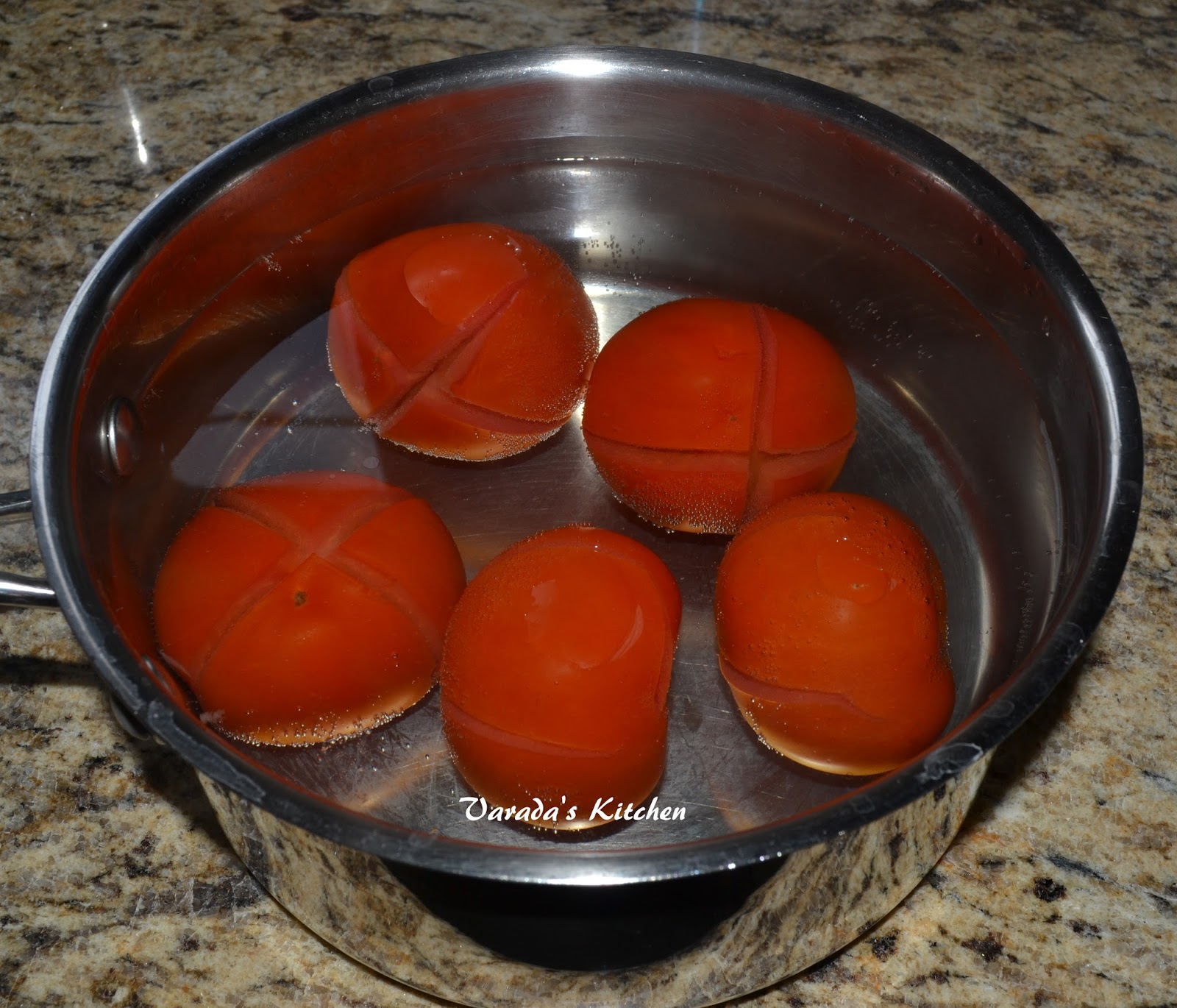
While the zucchini cook, heat water in a separate pan. Cut slits in the tomatoes and place them in the hot water for a few minutes. Drain and put the tomatoes in cold water. Then peel and chop them and keep aside.
Dice the onion and peppers into cubes. In the pan in which the zucchini were cooked add the onions and saute for a couple of minutes. Add the peppers and continue to cook.
Once the onions are peppers are cooked through add the tomatoes. Season with salt and allow the juices to flow. Dice the cilantro and add them to the mixture along with the basil. Turn off the heat and drain the juice. Reserve the juice. Separately, chop the zucchini.
In a casserole dish, place half the onion and pepper mixture. Layer half the zucchini over it. Then place the remaining onion and pepper mixture. Place the remaining zucchini as the last layer. Pour the reserved juice over the top. Place the casserole on medium/low heat and allow the juice to thicken. Occasionally collect and pour the juice over the top of the vegetables. Once the juice is thickened turn off the heat and serve hot.
Enjoy!
There are a lot of variations of this recipe and I tweaked it to suite our taste. I used red bell pepper instead of green. Also eggplant is one of the vegetables used in the preparation of Ratatouille. However, I am not a fan of eggplant so I skipped it.
You will need (6 servings)
5 small zucchini (I used organic so I could keep the peel)
2 tbsp. olive oil
2 red bell peppers
1 yellow onion
2 cloves garlic
5 small tomatoes
a handful cilantro (you can use parsley)
1 tbsp. basil
salt to taste
Wash and clean all the vegetables. Cut the zucchini along the long edge. Heat the oil in a pan and place a single layer of zucchini slices in it. When they turn brown flip the slices over. When browned on both sides take them out of the pan. Repeat for the remaining slices.
While the zucchini cook, heat water in a separate pan. Cut slits in the tomatoes and place them in the hot water for a few minutes. Drain and put the tomatoes in cold water. Then peel and chop them and keep aside.
Dice the onion and peppers into cubes. In the pan in which the zucchini were cooked add the onions and saute for a couple of minutes. Add the peppers and continue to cook.
Once the onions are peppers are cooked through add the tomatoes. Season with salt and allow the juices to flow. Dice the cilantro and add them to the mixture along with the basil. Turn off the heat and drain the juice. Reserve the juice. Separately, chop the zucchini.
In a casserole dish, place half the onion and pepper mixture. Layer half the zucchini over it. Then place the remaining onion and pepper mixture. Place the remaining zucchini as the last layer. Pour the reserved juice over the top. Place the casserole on medium/low heat and allow the juice to thicken. Occasionally collect and pour the juice over the top of the vegetables. Once the juice is thickened turn off the heat and serve hot.
Enjoy!
Subscribe to:
Posts (Atom)